

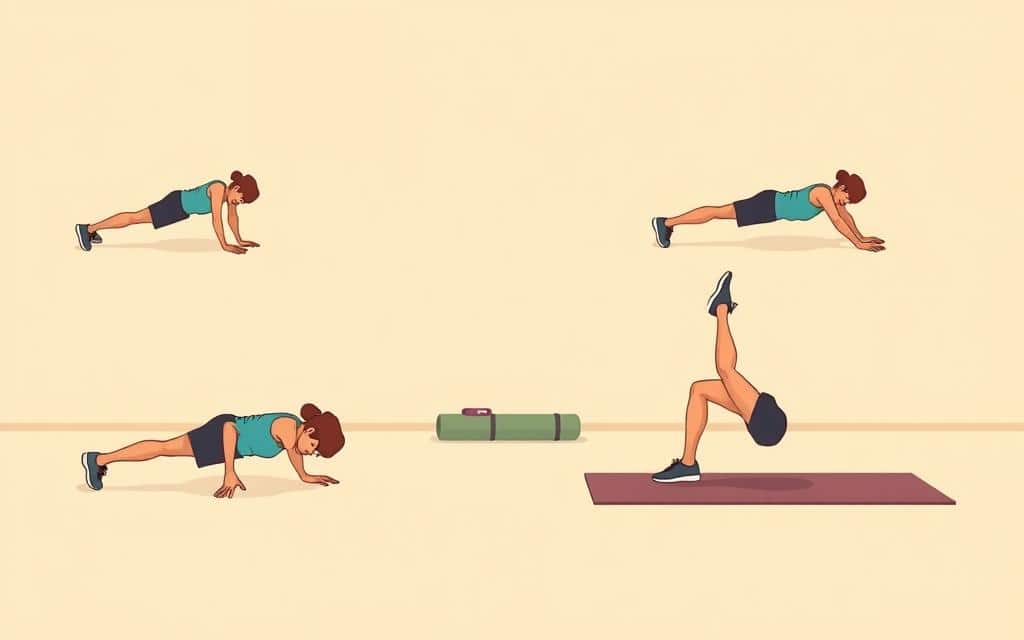
short daily workout routine for busy people can feel like a lifeline when your calendar is a storm of meetings and errands.
Your heart can rise, your mind clears, and five to fifteen minutes can taste like a tiny victory between emails. Imagine standing by the microwave and turning that wait into a burst of movement that actually adds up toward your goals.
These mini sessions use bodyweight and a few steps to fit any schedule. You’ll see options that take minutes, stack through the day, and link to real health benefits backed by research.
Pick a plan, set a timer, move with purpose, then get back to work feeling sharper. This method flips all-or-nothing thinking and makes progress possible in the time you have.
Key Takeaways
- Micro sessions of 5–15 minutes can meet fitness targets when stacked.
- Bodyweight workouts need no gym and fit beside your desk.
- Consistent tiny actions add measurable health benefits over time.
- Use simple timers and clear goals to stay on a busy schedule.
- Choose options that scale to your current fitness and confidence.
Why short workouts work when your day is packed
Small, focused periods of movement throughout the day deliver real health returns without stealing your calendar. Your body adds minutes of activity the same way it adds up mileage—total volume matters more than one long session.

Evidence in plain English: Studies link accumulated moderate to vigorous physical activity with lower mortality and better overall health. The American Heart Association says aim for 150 minutes of moderate or 75 minutes of vigorous activity per week, plus two days of strength training.
That target is doable by stacking brief bouts. Two or three 10-minute periods across the day can give you 20–30 minutes without blocking your schedule. HIIT and interval training let you hit vigorous rate in seconds-long pushes with short recoveries.
- Use the talk test: if you can chat, that’s moderate; if you can only say a few words, that’s vigorous.
- Think in bouts: minutes count, so track total activity each week rather than perfection each day.
- Practical tip: book two 10-minute blocks on your calendar like any other meeting and protect that time.
short daily workout routine for busy people
Transform idle minutes into effective training that targets strength, cardio, and posture. Pick the time you have and follow the exact moves below. Use seconds-based intervals so you can focus on effort, not counting reps.
Five-minute option: a quick bodyweight circuit you can do by your desk
One round, 30 seconds each with 0–10 seconds to switch: chair squats, desk push-ups, standing march, wall sits, calf raises. Set a timer and move continuously for five minutes.
Ten-minute option: HIIT intervals for cardio and muscle in less time
Work 30 seconds, rest 30 seconds × 10. Alternate jump squats and mountain climbers; then push-ups and high knees; finish with lunges and plank jacks. Alternate lunge sides to balance muscles.
Fifteen to twenty minutes: full-body circuit without the gym
45 seconds work, 15 seconds rest × 4 rounds: bodyweight squats, reverse lunges, glute bridge, push-ups, plank, alternating rows with a backpack, step-ups or stair bursts if available.
Level up or dial back: swaps for all levels
- Level up: add backpack load, elevate feet for push-ups, extend work by 5–10 seconds.
- Dial back: reduce impact (sit to stand, step back instead of jumping), cut work to 20 seconds, or take longer rests.
- Keep alignment: brace the core on squats and lunges, elbows at 45° on push-ups, drive through heels on bridges.
Fit movement into the cracks of your schedule
Squeezing in small bursts of activity turns wasted waiting into real wins for your day. Use simple triggers and bite-size plans that fit your time and space. These micro strategies make exercise habitual without hijacking your calendar.
Set phone reminders every 60–90 minutes and do a one-minute burst: 20–30 chair squats, a wall sit for 30–45 seconds, or a fast stair climb. Tie movement to habits you already do—after a meeting, knock out desk push-ups; while coffee brews, hold a plank.
At home, at work, traveling
Keep one band and one small dumbbell in your bag. They let you turn any room into a mini gym. In hotels, rotate squats, lunges, and push-ups for ten minutes. With a single dumbbell, add goblet squats or suitcase carries.
Quick, practical tips you can use now
- Phone + calendar: Block micro sessions labeled “movement” so meetings don’t erase them.
- Stairs routine: One flight easy, one flight fast, repeat for 2–3 minutes between calls.
- Energy reset: When you hit a slump, 60 seconds of high knees or a brisk walk beats another cup of coffee.
- Track minutes: Log total minutes in your notes app to watch how small efforts add up.
| Situation | Move | Time | Benefit |
|---|---|---|---|
| At desk | Chair squats or desk push-ups | 1–2 minutes | Posture, strength, mood boost |
| Between meetings | Wall sit or plank hold | 30–60 seconds | Core stability, focus |
| Commute or break | Stair bursts | 2–3 minutes | Cardio spike, calorie burn |
| Travel | Bodyweight circuit or single dumbbell | 8–10 minutes | Full-body strength, convenience |
Stay safe, progress smart, and recover well
A brief warm-up and clean form cut injury risk and keep gains steady. Start each session with two to three minutes of easy marching, arm circles, and hip hinges to raise temperature and prep joints.
Warm up, form first, and increase volume or intensity by 10–15% per week
Prioritize technique: keep a neutral spine on squats and hinges, knees tracking over midfoot on lunges, and elbows near ribs on push-ups. Clean reps beat sloppy speed every time.
Increase total minutes, sets, or intensity by no more than 10–15% each week. That steady climb protects tendons and muscles while you chase fitness goals.
Cool-down, stretch, sleep, and when to pause and talk to a healthcare provider
Finish with one to two minutes of easy walking, then stretch calves, quads, hips, chest, and lats. Breathe slowly to downshift your nervous system and lift mood for the rest of the day.
- HIIT tip: keep all-out efforts to short seconds and lengthen recovery if breathing or form falters.
- Strength: aim for two days a week of strength training to build muscle, joint support, and endurance.
- Recovery: get 7–9 hours of sleep when possible; rest fuels progress and reduces missed sessions.
- Red flags: pause and see a provider for chest pain, dizziness, sudden shortness of breath, sharp joint pain, or persistent swelling.
- Missed sessions: resume planned bouts—don’t double the time to “catch up.”
| Focus | Action | Why it matters |
|---|---|---|
| Warm-up | 2–3 minutes: march, arm circles, hip hinges | Preps joints, reduces injury risk |
| Form cues | Neutral spine, knees over midfoot, elbows tucked | Builds strength and protects muscles |
| Progression | +10–15% per week to minutes or intensity | Safer gains, fewer overuse flare-ups |
| Recovery | Cool-down, stretching, 7–9 hours sleep | Better performance, mood, and long-term health |
Conclusion
Make this simple: pick one quick session today and treat it like any other appointment. Five minutes by your desk or ten minutes of intervals counts toward your fitness and health goals.
Block two 10-minute slots on separate days this week and protect that time. Keep a short list of go-to exercises on your phone so you can launch a session without thinking.
Track total minutes and celebrate stacked efforts. You don’t need a gym or an hour—just a plan, a timer, and the decision to move. Gradually increase training each week and rotate moves to keep muscle and motivation growing.
Your next step: choose one example above and do it now. Show up—consistency beats perfect plans.