

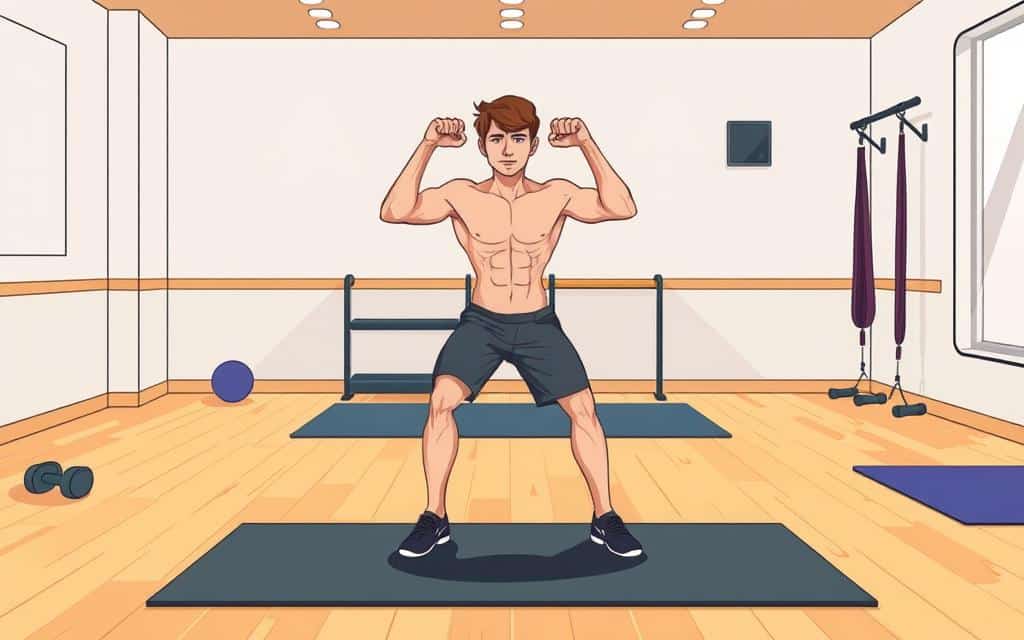
Imagine finishing a quick, effective session and feeling steadier, stronger, and ready for the day. The 30 minute beginner strength workout fits into busy schedules and uses simple dumbbell moves you can do at home or the gym.
You’ll follow a clear plan: two sets of 10–12 reps, 30–60 seconds rest, and patterns that cover press, row, squat, hinge, and plank. Geoff Tripp, CSCS, recommends these fundamentals because they build practical power you feel in daily life.
Expect exact reps, rest windows, and form cues so you never guess. I’ll show swaps like the floor press if you don’t have a bench, and cues to pick starting weights and when to level up.
Key Takeaways
- Simple plan: a full body circuit with dumbbells and bodyweight you can do in limited time.
- Clear order and reps so you focus on form, not guessing.
- Targets chest, back, shoulders, legs, and core with transferable movements.
- Home-friendly swaps and progression cues keep you moving forward.
- Designed to run three times a week for steady gains.
Why a 30-minute strength session works for beginners
Short, focused sessions let you build real power without rearranging your day. A compact plan packs press, row, squat, hinge, and plank patterns into one efficient block of training. That balance trains your whole body and keeps form simple.

- Dumbbell moves boost calorie burn and add muscle while supporting joints and bone density.
- Short sessions lower the barrier to entry, so you actually train more days per week.
- Tight time limits force focus — you cut fluff and get cleaner reps for better gains.
- Scalable loads mean you can start light, protect shoulders and elbows, then add weight as you improve.
- Foundational patterns translate to everyday tasks: carrying bags, climbing stairs, playing with kids.
| Feature | Why it works | How to track |
|---|---|---|
| Short sessions | Consistent stimulus without burnout | Days per week tracked |
| Dumbbell focus | Easy load changes and balance work | More reps or more weight |
| Foundational moves | Builds posture and core resilience | Smoother feet and elbow control |
Follow this approach for two to three sessions each week and measure progress by cleaner reps and the ability to handle a bit more weight over time. Small, steady wins add up fast.
What you need: dumbbells, space, and simple setup
Set up smart: two dumbbells, an open mat, and a spot where you can stand and press without bumping into furniture. Clear the area so each rep is intentional and safe.
Choosing the right dumbbell weights for today
Pick weights you can press for 10–12 smooth reps and still leave two reps in the tank on set one.
Start with two pairs if you can: a lighter pair for raises and a moderate pair for presses, rows, squats, and deadlifts.
If you only have one pair, match the load to your row or squat strength and slow the tempo on smaller moves to keep tension.
Safe training space: foot position, bench or floor options
Clear a yoga-mat–size area and place dumbbells near the top of the mat so you don’t trip over them. Wear flat, grippy shoes or go barefoot on a safe surface to root your feet and hold balance.
No bench? Use the ground for a floor press: press dumbbells from the ground and stop when your elbows touch the floor. This protects the shoulder and gives built‑in depth control for chest work.
- Hip-back hinge for rows and deadlifts: hips back, neutral spine, soft knees, bells close to legs.
- Quick pre-check: room to extend arms overhead, a stable surface, and clear sightlines for proper position.
Quick warm-up to prime muscles and joints
Begin with mobility and activation drills that cue proper position and breathing for the session. This gets your body online fast and cuts injury risk.
Spend 3–4 minutes mobilizing your hips and ankles with slow squat sit‑to‑stands and hip hinges. Move deliberately to teach depth and protect your knees.
Movement prep: hips, shoulders, and core activation
- Open shoulders with 8–10 arm circles each way and do 8 scapular push‑ups to wake the upper back.
- Fire up your core with 20–30 seconds of dead bug breathing or a steady plank hold.
- Use slow nasal breathing; if you’re gasping, slow the tempo.
Rehearsal reps with light weights for perfect form
Groove the patterns with light dumbbells: 5 goblet squats, 5 hip hinges, 5 presses, and 5 rows. Keep the tempo smooth and controlled.
| Drill | Purpose | Dosage |
|---|---|---|
| Squat sit-to-stand | Hip and ankle mobility, knee tracking | 3–4 minutes |
| Arm circles + scapular push-ups | Shoulder mobility and upper-back activation | 8–10 circles each way + 8 reps |
| Rehearsal set | Lock in movement, test position and breathing | 5 reps each pattern + one feel set (half working reps) |
30 minute beginner strength workout: full-body circuit
Run a compact circuit that trains every major pattern and keeps form front and center.
How to run it: do 2 sets of each exercise for 10–12 reps, resting 30–60 seconds between moves. For planks, hold 30–60 seconds or as long as you keep a straight line. Keep quality over speed so the next set feels controlled.
Upper body push: dumbbell bench or floor press
Plant feet, ribs down, press without locking the elbows. Lower with control to protect your shoulders and target the chest.
Upper body pull: bent-over row
Hinge at the hips, keep a flat back, and pull elbows to your ribs. Keep the dumbbells close and avoid shrugging the shoulders.
Shoulders: lateral raise or push press
Pick lateral raises for strict form. Use a small leg drive for a push press only if your torso stays tight and elbows stay soft at the top.
Lower body squat pattern: goblet squat
Hold one dumbbell at your chest, brace the core, sit between the knees, and drive through the mid‑foot. Let knees track over toes and keep heels down.
Hinge pattern: dumbbell deadlift
Push hips back, soft knees, bells brushing legs. Finish by squeezing hamstrings and glutes—don’t yank with your lower back.
Total-body combo: squat to overhead press
Squat, stand tall, then press overhead while stacking ribs over hips. Think “zip up your core” to prevent arching.
Core stability: high plank and side plank sequence
High plank: straight line head to heels. Side plank: hips high, stack shoulders. Do 30–60 seconds per position or drop to knees to keep form.
Arms finisher: biceps curls and triceps kickbacks
Keep elbows pinned for curls. For kickbacks, hinge at hips and squeeze the triceps at full extension without swinging the weights.
| Exercise | Sets & Reps | Rest | Key cue |
|---|---|---|---|
| Dumbbell press (bench/floor) | 2 × 10–12 reps | 30–60 sec | Ribs down, no elbow lock |
| Bent-over row | 2 × 10–12 reps | 30–60 sec | Hinge, pull to ribs, flat back |
| Goblet squat / Deadlift | 2 × 10–12 reps each | 30–60 sec | Knees track, hips back, heels down |
| Plank sequence & Arm finisher | 30–60 sec planks / 2 × 10–12 curls & kickbacks | 30–60 sec | Straight line, elbows pinned, controlled reps |
Form cues that protect your back, knees, and shoulders
Use simple, repeatable position checks to stay safe and lift better every rep. Scan your hips, ribs, and feet before each set. Keep cues short and use them mid‑set when fatigue hits.
Neutral spine and hip hinge: hamstrings do the work
Brace the core and tip from the hips. Keep a flat back on rows and deadlifts so the hamstrings and glutes take the load.
If your lower back rounds, drop weight and reset. Think hinge, not squat, when you reach for the floor.
Knees track over toes: stable feet, strong arches
Let knees follow the toes on squats and lunges. Press the floor with your big toe, little toe, and heel—so your feet act like a tripod.
If knees cave, shorten your stance or reduce load until the right muscles engage.
Shoulder position: ribs down, elbows soft at the top
Set your ribs down before pressing. Keep elbows slightly bent at lockout and avoid flaring. This centers the shoulders and protects the joint.
Row with intent: pull elbows to your hips, pause at the top, and stop using momentum. Squeeze your upper body so the arms do controlled work with the dumbbells.
- Neutral spine: tip from hips, brace core, keep back flat.
- Feet & knees: tripod foot, knees over toes, adjust stance if needed.
- Pressing: ribs down, soft elbows, avoid flare.
- Tempo: slow lowers (2–3 seconds) to control position and protect joints.
| Risk | Quick fix | Why it helps |
|---|---|---|
| Rounded back | Lower the load | Hamstrings pick up the hinge |
| Knees caving | Wider stance or lighter weight | Better knee tracking and safer joints |
| Shoulder strain | Ribs down & soft elbows | Keeps shoulders centered and stable |
Final rule: if a rep shifts to your back or knees, stop and fix the line. Reduce range, change stance, or drop weight until the right muscles fire. Small adjustments protect you and help you build more strength over time.
Timing options: traditional circuit vs AMRAP
Choose a pacing style that forces progress without wrecking your form. Both formats train movement and build measurable gains. Pick the method that fits your available time and how hard you want to push.
Traditional circuit: Complete each exercise for 2 sets of 10–12 reps with 30–60 seconds rest. This plan is steady and teaches positions while keeping fatigue manageable.
AMRAP guide: Set a clock for a defined window and cycle through the list for as many quality rounds as possible. Track total reps as your score and aim to beat it on repeat sessions.
- Keep reps crisp. If form slips, pause, breathe, and reset—quality beats sloppy speed.
- Use short, strategic mini-rests so you can keep moving without technique collapse.
- Start at a sustainable pace for the first third, then nudge intensity in the final third to finish strong.
- Retest your AMRAP score weekly or biweekly and adjust the plan by adding reps, lifting a bit more, or trimming rest.
| Format | Timing | Goal | How to track |
|---|---|---|---|
| Traditional circuit | 2 sets × 10–12 reps per exercise, 30–60 sec rest | Technique & consistent load progression | Log sets, reps, and rest; increase weight/reps over weeks |
| AMRAP | Clock-based (common: 30-minute window) | Endurance, intensity, and a competitive score | Total reps/rounds recorded as a score to beat |
| Hybrid | Timed rounds with capped sets (e.g., 10 min AMRAP of select moves) | Balance speed with form preservation | Rounds completed + form notes for each session |
Your weekly plan: 3 days per week with smart progression
Set a simple weekly rhythm so training becomes a habit, not a headache.
Train three days a week on nonconsecutive days to balance stimulus and recovery. Think Monday, Wednesday, Friday or Tuesday, Thursday, Saturday. Each session stays full body so you hit every major muscle more often without long gym stints.
Schedule example: full body on nonconsecutive days
Do the same circuit each session for 3–4 weeks. Keep the order and aim for the target sets and reps. Track the best weight and the tightest rest you used.
- Day 1: Full body circuit — press, row, squat, hinge, plank.
- Day 2: Same circuit — focus on cleaner reps and slight tempo changes.
- Day 3: Repeat with a small push for either more reps or shorter rest.
Progress methods: add reps, increase weight, or shorten rest
Progress one variable at a time. First add 1–2 reps per set across exercises. When all sets feel smooth, raise weight by the smallest jump and rebuild control.
You can also trim rest by 5–10 seconds while keeping form sharp. If you prefer AMRAP, record total rounds or reps each week and aim to beat that score.
| Leverage | Action | Goal |
|---|---|---|
| Reps | Add 1–2 reps per set | Increased volume without more sessions |
| Weight | Small jump when sets feel easy | Progress muscle load safely |
| Rest | Reduce by 5–10 sec gradually | Raise density while keeping quality |
| Deload | Every 4th week reduce sets or cut time | Recovery for muscle and joints |
Recovery, safety, and when to scale or rest
Fast fixes mid-session can stop a small twinge from becoming a real problem. You should treat soreness and normal effort differently from sharp pain. Use simple changes right away so you can keep training safely and come back stronger.
Red flags vs normal effort: what to adjust in real time
Normal effort feels like burning muscles and heavier breathing. Red flags are sharp joint pain, pinching in the shoulders, or tugging in the lower back—stop and reset if these occur.
- If push-ups or planks strain your back, drop to knees or elevate hands on a chair to keep a straight line from ankles to shoulders.
- If your knees cave on squats, slow the descent, widen stance, and drive knees over toes; reduce load if it continues.
- For cranky shoulders, keep ribs down, shorten range, or switch to a floor press so the ground limits descent.
- If your back takes over during hinges, keep the bells close to your legs, shorten range, and brace your core before moving.
Scale volume in real time: cut a set, drop 2–3 reps, or add 15–30 seconds rest to protect form. Prioritize sleep, hydration, and easy walks on off days to help legs and core recover for the next session.
| Issue | Quick fix | Why it works |
|---|---|---|
| Knee collapse | Wider stance / lighter load | Improves tracking and reduces strain |
| Shoulder pinching | Floor press / reduce range | Uses ground for depth control |
| Lower back tug | Shorten hinge, brace core | Shifts load to hamstrings and glutes |
Conclusion
You’ve got a simple routine that trains upper body and lower body in one full body session. Stick to the plan: two sets of 10–12 reps, short rest, and clean mechanics for press, row, squat, hinge, and plank.
Use dumbbells you control, brace your core, and focus on hips and hamstrings driving the hinge. If you lack a bench, press from the ground to protect your chest and shoulders while still pressing hard.
Run this routine three days per week, track loads and reps, and progress by adding a rep, nudging weight, or trimming rest. Keep showing up with honest form and you’ll build real strength and fitness—one solid set at a time.