

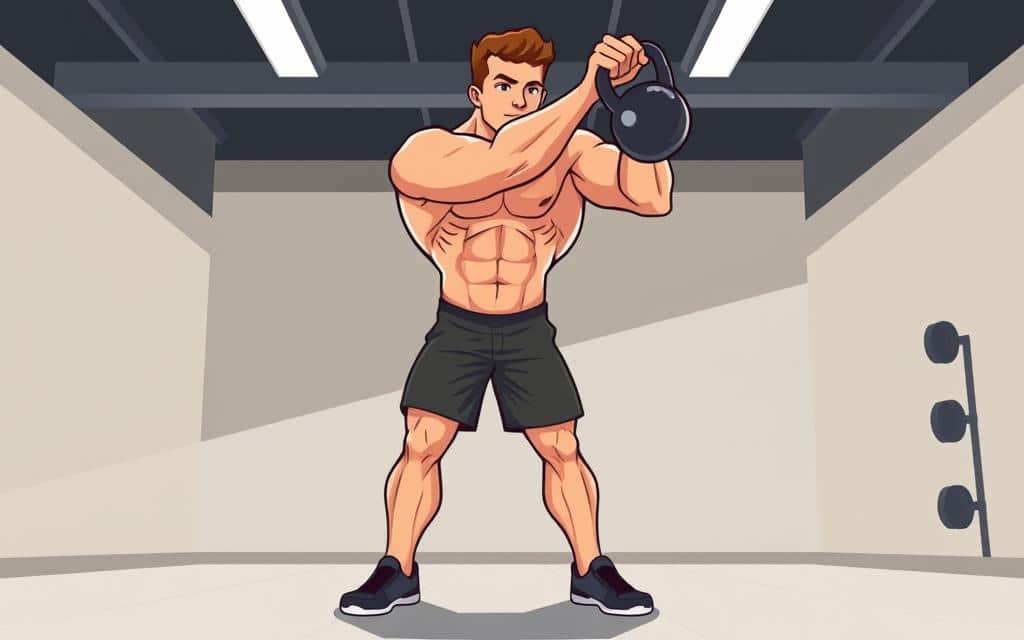
You feel the bell pull at your hips before anything else — that first tug tells you if the movement will be effortless or a grind. kettlebell swing form tips start with a loud, honest hip hinge and a breathing rhythm that powers each rep.
A good swing is a body-driven pattern, not a rigid pose. Shoulders sit over hips, hips over knees, and the spine stays long. Vertical shins are a guide, not a rule; tweak stance to fit your build.
Breathe with purpose: a sharp inhale on the backswing, a firm exhale at the top. Feel the forearms kiss the high groin and the wrists skim the inner thighs so the bell stays close and your shoulders stop doing the work.
Key Takeaways
- Use your hips as the engine — not your arms or shoulders.
- Keep the spine long and set your feet for your body type.
- Breathe: inhale back, exhale through the top for timing and power.
- Touchpoints matter — forearms near the groin and wrists near thighs.
- Small checks mid-set stop a sloppy rep before it costs your back.
Why the kettlebell swing belongs in your workout right now
Make room in your workout for a drill that trains force, rhythm, and endurance together.
What it trains:
Hips, glutes, hamstrings, lats, core, and grip
This movement targets the posterior chain hard. Your glutes and hamstrings produce the drive. Your lats and core control the bell and protect your spine.
The grip and upper body stabilize every rep. That means you build strength and functional muscles with fewer exercises.
Power and conditioning without beating up your joints
Because you create momentum and then absorb it, you train true power and body control. Sets spike your heart rate fast while staying low-impact.
- Efficient: a few focused sets replace lots of accessory work.
- Joint-friendly: low-impact cardio that won’t hammer your knees.
- Transferable: you’ll feel the force carry to sprints, jumps, and daily tasks.
Keep the bell close to your thighs and brace your torso. Most common issues fix fast with those cues and steady practice.
The setup that makes great swings inevitable
Start with the setup and the rest follows: feet, bell, spine — done right, you remove guesswork from every rep.
Foot position, bell placement, and a neutral spine you can keep
Set your feet slightly wider than hip-width and point your toes mostly forward. Park the kettlebell 12–18 inches in front of your toes so the hike back is clean and tight.
Hinge with a flat back — push hips back, not down. Aim for shoulders above hips and hips above knees. Keep a long spine and a proud chest; your head stays neutral with the torso.
Lat engagement: connect arms to ribs to protect shoulders and back
Grip the handle with both hands and “pack” your lats by pulling your shoulder blades down and back. Think of your hands as links to your ribs — soft elbows, quiet hands.
- Weight slightly toward heels while your whole foot stays rooted.
- Accept a little knee bend if you need it; avoid chasing vertical shins at the cost of your back.
- Check the setup: can you feel hamstrings loaded and core braced before the hike? If yes, you’re ready.
Set the bell and your body the same way every time. That consistency keeps your reps strong and your back safe as you increase weight or reps.
Step-by-step swing technique you can feel
Start each rep by sweeping the bell back hard and loading your hips, not your shoulders. Tip the handle, load your lats, then drag the bell high between your legs to load hamstrings and core. This hike sets timing and keeps your hands from yanking the weight.
The hike: load the hips, not the arms
Keep the hinge deep as the bell moves back. Ribs stay connected to your hands so the bell stays glued close to the body. Think of the hike as a power transfer, not a pull with your arms.
Hip drive and glute snap
Drive your hips forward like you’re stopping a jump midair. Snap the glutes to send force horizontally. Arms stay loose; the bell floats because the hips supply the power.
The float and top position
Stand tall and stacked—ankles, knees, hips, shoulders in one line. At the top, brace: tight ribs, tight abs, tight butt. That protects your lower back and shoulder.
Downswing and timing
Wait, then fold fast at the hips. Keep the bell skimming your upper thighs, not slapping the knees. Eyes follow the torso; keep your head neutral so the back stays happy.
Breathing rhythm to match the movement
- Quick inhale as the bell passes the groin.
- Sharp exhale at the top to lock position and add power.
If the bell slaps your forearms or scrapes the floor, you lost the hinge or the timing. When in doubt, swing kettlebell lighter, groove the rhythm, then build weight back up.
kettlebell swing form tips you’ll use every set
Use a few repeatable cues that hold up when sets get heavy and your focus fades. Practice them until they become automatic so your technique doesn’t crumble under fatigue.
- “Hinge, don’t squat.” Move your hips back first. Keep knees soft but don’t let them drive the motion forward.
- Shins as vertical as your structure allows. Chase a hip hinge, not perfect shins. Protect a neutral spine over an Instagram posture.
- Drive hands high into the groin on the backswing. That shrinks the arc and keeps the bell tight to your body.
- Soft arms, hard torso. Pack the lats, brace the abs, and let the hips supply power. The upper body guides, it doesn’t lift.
- Let your wrists brush the inner thighs each rep to reduce arc and stress on the back.
- If knees creep forward, use a box or a hand as a target to stop the drift.
- Keep the same setup and first rep every set. Film one side set to confirm a true hinge, not a mini-squat with a shoulder raise.
Breathe with purpose: quick inhale at the bottom, sharp exhale at the top. Those small habits lock position and make every rep count.
Common mistakes and fast fixes
A few common mistakes steal your power and crank up injury risk faster than you think. Below are quick, on-the-spot corrections you can use between sets.
The squatty pattern
If your knees drive forward and you end up squatting, place a box or a partner’s hand just in front of your shins. That forces a proper hip hinge and keeps the hips moving back.
Too big an arc behind you
“Attack the crotch” mentally and keep your wrists brushing the inner thighs. Shorten the arc with a stronger hike so the bell tracks high and close.
No upper-back tension
Do a wall scap set: press your shoulder blades down into a wall, then hold that feel. It locks the lats and protects the shoulders and back during each rep.
- Overextending at the top: squeeze glutes instead of leaning back through the lower back.
- Yanking with the arms: practice dead-stop reps so every rep starts from hips and lats, not hands or biceps.
| Mistake | Quick Cue | Drill | Immediate Result |
|---|---|---|---|
| Squatty knees | Box in front | Hinge-only reps to box | Cleaner hip hinge, less knee drive |
| Big arc | Attack crotch | Hike swings | Tighter path, less stress on back |
| Loose upper back | Wall scap set | Scap holds + light reps | Stronger lats, safer shoulders |
| Arm yanking | Dead-stop | Pause between reps | Hips drive, fewer bad reps |
Keep it simple: one cue per set, one drill per flaw. Stop the set if the pattern falls apart—bad reps teach risk, not strength.
Simple drills to groove better swings
Groove beats grind: pick a drill, own the start, and let power follow. These short drills teach timing, hip drive, and breathing without extra fatigue.
Air practice for rhythm and breath
Do air reps without load. Arms meet ribs, then hinge and snap tall. Inhale at the bottom, exhale at the top. Stay light and repeat for two minutes.
Hike clusters to own the start
Set the bell 6–12 inches in front. Hinge, pull to the crotch, stand aggressively, then set it down. Do 3–5 singles per cluster and repeat 3–5 times. Reset completely between reps.
Dead-stop reps for clean force
Start each rep from a dead stop on the floor. This forces a true hip hinge and better power off the ground. Use light to moderate weight so you feel lats pack and your core brace.
- Focus: hinge early, snap fast, float, then hinge again.
- If your back tenses, shorten the arc and reduce range.
- Pairing: 2 minutes air, 10 hike singles, 10 dead-stops, then retest regular kettlebell swings.
| Drill | Reps | Focus | Immediate Benefit |
|---|---|---|---|
| Air practice | 2 min | Rhythm, breath | Cleaner timing |
| Hike clusters | 3–5 x 3–5 | Start mechanics, bell placement | Tighter path, better snap |
| Dead-stop reps | 8–12 reps | Force production, reset | Stronger first pull |
| Mini-session | Mix | Flow + power | Immediate carryover |
Programming that matches your goal
Decide what you want from your sessions—skill, work capacity, or straight strength—and build blocks around that. Pick one focus per workout so the set, rest, and stop rules line up with your aim.
Technique practice: light-to-moderate sets with perfect positions
Protocol: 3 x 10–15 reps with light to moderate load. Take full rest between sets.
Every rep should match your setup and lockout. Breathe in the bottom, out at the top. Head neutral. Stop the set if position drifts.
Conditioning: EMOMs and density work without form drift
Protocol: 5–15 minute EMOM of 10–20 reps. Use a moderately heavy bell that challenges you but keeps technique clean.
Quality beats numbers. If your back tenses or grip fails, end the block early. EMOMs force honest time and rest cues.
Muscular endurance: quality AMRAPs and when to stop
Protocol: 10-minute AMRAP focused on consistent reps and tight movement. Break sets before technique fades.
Stop rules: extra rest, shorten sets, or finish on a good rep. Ending early preserves strength and prevents injury.
Choosing the right weight and progressing safely
Start around 10% of your deadlift 1RM. When you own 15 crisp reps, increase weight modestly.
- Warm-up: air swings, hike singles, dead-stop swings.
- Track: total reps and your hardest clean set; progress one variable at a time—weight, reps, or time.
- Frequency: 2–4 sessions per week based on recovery. More isn’t better if technique falls apart.
- Grip: shorten sets or add rest when grip fades; pair swings with carries or planks to reinforce bracing.
| Goal | Protocol | Rest/Stop Rule |
|---|---|---|
| Technique | 3 x 10–15 reps | Full rest; stop if position drifts |
| Conditioning | EMOM 5–15 min, 10–20 reps | End early if form slips |
| Endurance | 10-min AMRAP | Break sets before fatigue ruins power |
Smart variations and solid alternatives
When your regular sets stall, smart variations give you a precise fix instead of random change.
Single-arm, double, and staggered-stance options
Single-arm adds anti-rotation demand and tests shoulder control. Keep hips square and switch hands cleanly. Use lighter weight and focus on a crisp hip hinge.
Double raises the load and crushes your grip. Brace the core harder and hinge deeper so the legs and glutes drive the movement, not the upper body.
Staggered-stance exposes left-right differences. Go very light and prioritize balance and symmetry over reps.
No bell? Practical at-home alternatives
- Dumbbell swings follow the same hinge and close path—watch handle orientation and keep the arc tight.
- Banded pull-throughs teach the hip hinge under tension without heavy axial load on the spine.
- Broad jumps train explosive power and leg drive—land softly and reset between reps.
Use variants with purpose: single-arm for anti-rotation, double for load, staggered for balance. Keep reps manageable so your grip and upper body don’t steal the work. Progress only when reps feel crisp and symmetrical.
Safety, structure, and real-world adjustments
A repeatable body map keeps your reps honest and your back out of trouble. Use a clear blueprint and make small adjustments for your build. The goal is reliable movement, not an Instagram pose.
Hip hinge blueprint
Shoulders over hips, hips over knees, spine maintained. This alignment keeps load on the legs and hips instead of the lower back. Stand tall at the top and hinge early on the downswing.
Structure matters
Vertical shins are a guideline, not a requirement. Adjust foot turnout so your feet feel rooted and your hips can drive. A stance that repeats session after session beats textbook angles that fight your anatomy.
Lower back–friendly habits
Pack the lats by thinking arms to ribs. Keep your head neutral and brace the core. Trim the arc by letting the bell or handle brush your inner thighs so the path stays tight and puts less stress on the spine.
- Hold the blueprint each rep to reduce risk of injury.
- If a rep tweaks your back, stop and shorten range.
- Use lighter weight until your position holds under fatigue.
| Check | What to feel | Quick fix |
|---|---|---|
| Shoulder–hip line | Stacked, chest proud | Retract lats, reset grip |
| Hinge timing | Early fold, hips back | Practice hinge-only reps |
| Foot stance | Grounded, repeatable | Adjust turnout for comfort |
| Back feel | No sharp pain | Lower weight, film from side |
Conclusion
Treat this movement like a skill you practice, not a task you rush. A refined kettlebell swings pattern is a smooth, powerful hip hinge tailored to your body. Air reps, hike singles, and dead-stop work build rhythm and timing faster than heavy misses.
Keep the bell close to your thighs, stand tall at the top, and squeeze your glutes to protect the lower back while you unlock real power. Start light, master 15 solid reps, then increase weight or volume without letting your form slip.
Make it simple: film one set this week, tweak one cue, and retest. Give the movement focused time and the strength, conditioning, and confidence follow.