

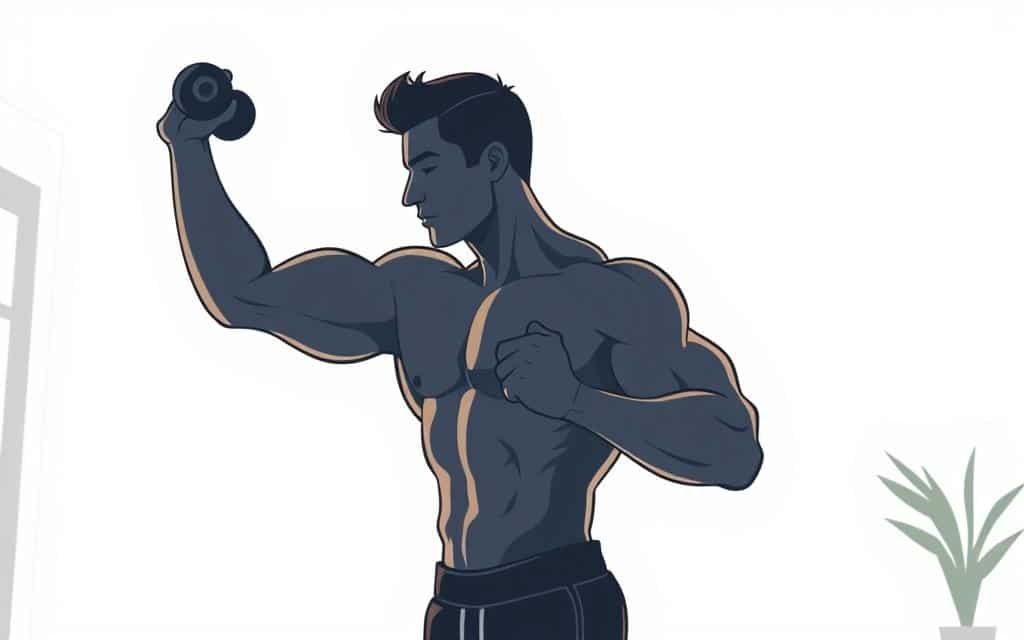
You can feel the pull in your hands when you deadlift a heavy bag or hang from a bar — that twinge is a sign your grip could use attention. This plan shows simple, proven moves you can do with a dumbbell, towel, backpack, or even a tennis ball to build real grip strength and wrist resilience.
Expect clear steps and real cues so you waste no time guessing. I’ll coach you like a training partner: short warm-ups, joint-friendly progressions, and reliable exercises like carries, hangs, wrist curls, and fingertip presses.
You’ll leave this section knowing why stronger forearms matter for daily tasks and bigger lifts, and how to fit quick sessions into a busy week. No fluff—just practical, steady ways to level up your grip and forearm strength safely.
Key Takeaways
- Simple tools — dumbbell, backpack, or ball — are all you need to start.
- Warm up wrists with circles and side-to-side moves to reduce injury risk.
- Focus on carries, hangs, wrist curls, and plate pinches for steady gains.
- Short, consistent sessions beat random heavy days for grip progress.
- Control reps and joint position to protect wrists and elbows while training.
Why stronger forearms matter for life, lifting, and sport
A weak grip often shows up at the worst time — midway through a heavy set or while lugging a suitcase.
Grip strength links directly to upper-body strength and daily function. If your hands fail, your back and legs rarely get to finish the lift. That limits progress and can stall big compound moves like deadlifts and rows.
In daily life, stronger forearms make simple tasks easier: opening tight jars, hauling groceries in one trip, and carrying luggage without finger pain.
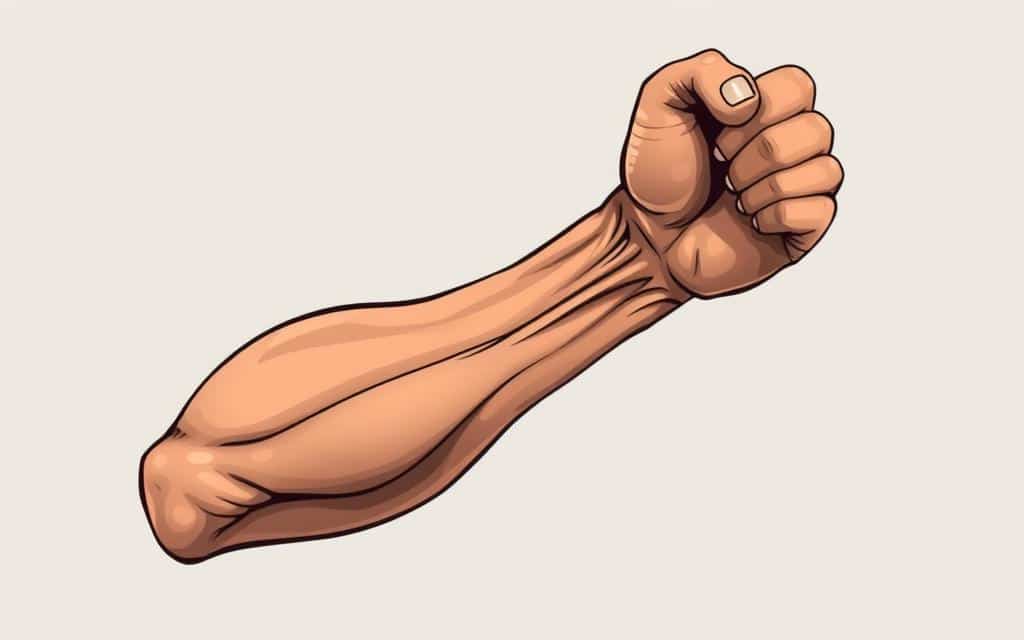
Sports benefit too. Better forearms give a steadier golf swing, crisper hockey stick control, firmer racquet handling, and more secure basketball holds. In short, forearm strength improves performance and reduces early fatigue.
- Lift more: your bigger muscles can work if your grip holds.
- Everyday wins: fewer sore fingers after chores or travel.
- Sport carryover: steadier hands under pressure.
You don’t need long sessions. A few focused exercises each week build real capacity and better wrist control, which helps pressing and pulling mechanics. This guide shows how to add those quick, effective moves into your training plan.
Know your forearms: flexors, extensors, and the brachioradialis
A simple turn of the wrist rewrites which parts of your lower arm do the work. Below is a plain-language look at the key pieces and why hand position changes the feel during lifts.
How grip strength ties to overall upper-body strength and mobility
Grip strength is a limiter for many big pulls. The forearm flexors and extensors stabilize the wrist and fingers so your bigger muscles can finish the lift. Stronger forearms mean fewer early failures and better daily function.
Palms facing up vs. down: what changes in muscle activation
- The flexors (underside) curl the wrist and close fingers; they light up with palms-up curls.
- The extensors (top side) open the hand and extend the wrist; they burn when you use palms-down work.
- The brachioradialis runs along the thumb side. It helps elbow flexion and shows up on reverse or neutral-grip moves.
- Small changes in hand position shift which tissues do most of the movement. Use both to avoid imbalance during training.
| Grip | Primary activation | Typical feeling | When to use |
|---|---|---|---|
| Palms-up (supinated) | Flexors | Deep pinch and inner forearm burn | Wrist curls, pinches, supinated curls |
| Palms-down (pronated) | Extensors + brachioradialis | Top-of-forearm burn, faster fatigue | Reverse curls, pronated rows |
| Neutral (thumbs up) | Brachioradialis & grip stabilizers | Balanced tension, strong holds | Farmer carries, neutral curls |
Warm-up and setup at home to protect your wrists and elbows
Begin with a brief flow that targets wrist mobility and finger activation. The goal is to boost blood flow, reduce stiffness, and cue the nervous system so your hands respond under load.
Quick wrist circles, side-to-side moves, and finger priming
Spend 2–3 minutes on wrist circles both directions. Follow with side-to-side and flex/extend reps.
Open and close your hand firmly for 30–60 seconds to prime the fingers and forearm muscles.
Do one very light set of each first exercise to groove the movement pattern before adding weight.
Simple tools and setup for easy use
Use household items to keep things simple and practical.
- Dumbbells: 5–10 lb to start for controlled movement.
- Towel: Wrap around handles to thicken the grip and reduce wrist strain.
- Backpack: Fill with books for carries and holds.
- Tennis ball or sock: For forearm squeezes and finger priming.
- Doorway bar or pull-up bar: For light hangs and grip tests.
| Tool | Primary use | Start guidance |
|---|---|---|
| Dumbbells | Wrist curls, light holds | 5–10 lb, one easy set first |
| Towel | Thick-grip modification | Wrap handles, reduce pinch at wrist |
| Tennis ball / backpack | Finger squeezes / loaded carries | 30–60s squeezes; light carry distance |
Key cues: keep shoulders down and back, start lighter than you think, and if anything pinches at the wrist reduce range or switch to a neutral grip. These small steps protect your elbows and keep training consistent.
best forearm workout at home: a follow-along routine
Set a timer and move through four focused blocks. Each block targets different forearm roles so you build balanced strength and endurance.
Bodyweight block
Dead hangs: 2–3 sets of 20–60 seconds. Use a pull-up bar or countertop hang. Keep shoulders down, elbows slightly bent, and engage the lats.
Plank shoulder taps: 2–3 sets of 30–45 seconds. Brace your core, feet wider to reduce sway, and keep hips level.
Wrist curl superset
Palms-up wrist curls 10–15 reps, then palms-down 10–15 reps. Do 2–3 rounds with 60 seconds rest. Support forearms on a bench or knee for strict form.
Grip finisher
Tennis ball squeezes 45–60 seconds per hand or plate/dumbbell pinches 20–45 seconds. Stand tall, shoulders down, and avoid shrugging.
Farmer’s carry laps
2–3 sets, 30–40 feet total or 30–45 seconds pacing a hallway. Grip tight, walk tall, and keep weights from banging your legs. Thicker grips or a towel wrap add challenge.
- Rest 60–90 seconds between blocks. Total session: 20–30 minutes of focused training.
- Progress by adding time to hangs, another superset round, or slightly more weights each week.
- Regression: shorten range, use neutral handles, or reduce hold time if wrists protest.
| Block | Sets | Time / Reps | Key cue |
|---|---|---|---|
| Bodyweight | 2–3 | 20–60s hangs; 30–45s taps | Shoulders down, slight elbow bend |
| Wrist curl superset | 2–3 | 10–15 reps each | Forearms supported, controlled motion |
| Grip finisher | 1–2 | 20–60s holds | Stand tall, no shrugging |
| Farmer’s carry | 2–3 | 30–45s or 30–40ft | Grip hard, walk tall |
Exercise library: proven forearm exercises you can do anywhere
Use this exercise library to target specific lower-arm muscles with clear cues and simple swaps.
Wrist curls — palms up & palms down
How: Rest forearms on a bench, knees, or table. Move only the wrist.
Sets/Reps: 2–3 sets of 8–15 reps each direction.
Common mistake: swinging the elbow. Keep forearms glued to the surface.
Reverse curl & Zottman curl
How: Use a bar or dumbbells. Reverse curl with an overhand grip; Zottman curl rotates at the top and lowers slow.
Sets/Reps: 10–12 reps for reverse; 8–12 for Zottman with a 3–4s negative.
Common mistake: using momentum. Pause at the top and control the descent.
Grip crushers, pinches, and carries
How: Squeeze a gripper or a dumbbell in the fingers for crushers. Pinch two plates or books for holds.
Sets/Reps: Grip crush 2–3 sets of 10–20 reps. Plate pinch 30–60 seconds. Farmer’s carry 30–60s.
Advanced bodyweight options
Fingertip push-ups and crab walks challenge the wrists and fingers while training the core. Do 2–3 sets of short holds or 20–60 seconds per set.
- Household swaps: Backpack for curls, canned goods for light wrist curls, towel-wrapped handles for thicker grips.
- Quick cue: Breathe steady, shoulders packed, and keep wrists neutral when possible.
| Exercise | Sets / Reps | Key cue |
|---|---|---|
| Wrist curls (palms up/down) | 2–3 × 8–15 | Forearms supported; small strict movement |
| Reverse / Zottman curl | 2–3 × 8–12 | Elbows tight; slow eccentric |
| Grip crush / Plate pinch / Farmer’s carry | 2–3 sets; holds 30–60s | No shrugging; steady breathing |
Minimal equipment solutions: dumbbells, bands, and backpack swaps
When dumbbells aren’t around, everyday items can deliver exacting grip and wrist stress. Start light: use 5–10 lb dumbbells to learn the movement and add weight slowly.
No dumbbells? No problem. Fill a backpack with books for reverse curls, Zottman curls, and wrist curls. Hold the top handle and keep the motion tight and controlled.
Water jugs or detergent bottles act like adjustable weights. Add small amounts of water to progress in joint-friendly steps. Canned goods work well for higher-rep wrist curls and isolates.
Bands, towels, and thicker grips
- Loop a resistance band for pronation/supination — rotate the forearm against the band to overload the turning movement.
- Wrap a towel around any handle to create a thick grip that quickly lights up the muscles without heavy weights.
- Backpack reverse curls and wrist curls are a solid replacement for a single dumbbell and scale easily.
| Tool | Use | Progression |
|---|---|---|
| Dumbbells / water jugs | Wrist curls, reverse curls | Start 5–10 lb; add small increments weekly |
| Backpack | Zottman, reverse curls, carries | Add a book or two each week to increase load |
| Bands / towel | Pronation/supination, thick-grip work | Increase band tension or towel thickness |
Progress tips: add a book to the pack, a splash of water to jugs, or another band set each week. Keep palms comfortable by shifting towel position to avoid pinching. Always use controlled movement — avoid swinging — so the load stays on the forearm and not momentum.
Sets, reps, and weekly plan that actually builds forearm strength
A clear weekly plan turns random grip work into measurable progress. Use simple rules for reps, holds, and frequency so strength grows without burning out your hands or pulling days.
To-failure guidance vs. rep ranges for size and endurance
For size, do wrist curls and reverse curls for 2–3 sets of 8–15 reps. Stop with 0–2 reps left in reserve on most sets. Take the final set close to failure while keeping clean form.
For endurance, build holds to 30–60 seconds. Add 5–10 seconds each week. Isometrics like hangs are safe to take near true failure.
Times per week, rest days, and combining with other training
- Train the forearm 2–3 times per week with at least 48 hours between heavier sessions.
- Do one focused session plus 1–2 short add-ons after pulling or full-body workouts.
- Keep total working sets per session to 6–10 across curls, reverse curls, and grip exercises.
- If wrists or elbows feel sore, cut weekly volume by 20–30% for a recovery week.
| Frequency | Volume | Progression | Goal |
|---|---|---|---|
| 2× per week | 6–8 working sets | Add 1–2 reps or +5s holds weekly | Strength & size |
| 3× per week | 8–10 working sets + micro-squeezes | Extra short holds on off days | Endurance & grip |
| 1 focused + 1 add-on | 6–9 working sets total | Increase load slowly over a week | Maintain with limited time |
Progress safely: load, time under tension, and thicker grips
Small changes to tempo, hold time, and grip thickness deliver big returns for your lower-arm work. Start by squeezing more control into each rep before you increase load.
Tempo work and isometric holds to extend time under tension
Use a slow eccentric on wrist curls and reverse curls. A 3–4 second lower stacks time under tension without heavier plates.
Add short squeezes at the top of curls and 10–20 second mid-range holds on reverse curls to recruit the brachioradialis.
Progressions, regressions, and when to add weight
Wrap a towel around a handle to create a thicker grip. It increases muscle activation without jumping weight. Grow hangs and pinches by 5–10 seconds each week until you can hold steady near a minute.
- Progress weight only when you control tempo and position for every rep.
- Regress with a shorter range, lighter dumbbells, or full-palmed holds if wrists feel sore.
- If you get sharp pain or nerve-like tingling, stop and switch to neutral grips; return to load only when pain-free.
| Focus | How to progress | Green / Red |
|---|---|---|
| Wrist curls | 3–4s lowers; 1–2s top squeeze | Green: controlled reps / Red: shaky wrists |
| Hangs & pinches | +5–10s weekly to 60s | Green: steady scapula / Red: shoulder shrugging |
| Thick-grip work | Towel wrap before adding weight | Green: increased grip fatigue / Red: wrist pinch |
Key cue: prioritize control. Time under tension and thicker handles often beat early weight jumps and keep your wrists safer while you build real strength.
Form cues that protect your wrists and prevent injuries
A few simple position checks protect your wrists and let strength grow without setbacks. Use these cues every session so you stop problems before they start.
Neutral spine, shoulders down and back, smooth controlled motion
Pack your shoulders down and back before you grip a bar or dumbbell. A stable shoulder gives the wrist and elbow a better working position.
Keep a neutral spine and a lightly braced core so the forearm can work without your body swaying. Move smoothly—no jerking on wrist curls, no swinging on reverse curls, and no bouncing off the floor on push variations.
When to stop: distinguishing normal fatigue from forearm pain
Normal fatigue is a steady burn. Pain is sharp, pinchy, or lingers after the set—stop and regress immediately if that shows up.
- Dead hangs: keep a slight elbow bend and an active grip; don’t let the bar slide to your fingertips.
- Reduce range of motion, lighten the load, or switch to a neutral-grip tool if your wrists feel irritated.
- If soreness remains after training, try brief icing and gentle range-of-motion work to calm tissues.
| Focus | Quick check | Action if red flag |
|---|---|---|
| Shoulder / posture | Chest open, shoulders down | Reset posture; reduce load |
| Core / spine | Neutral spine, braced | Shorten sets; re-groove breathing |
| Wrist / forearm | No sharp pain, steady burn | Stop, switch grip, or rest |
Carryover: how forearm training boosts pulls, rows, and everyday tasks
When your grip holds longer, rows and deadlifts stop being limited by your hands and start testing your back and arms instead.
What that means for lifts: stronger forearms delay hand fatigue on pull-ups, hangs, and heavy rows. That lets your bigger muscles do more work and you complete more quality reps.
Practical carryover: deadlifts feel steadier when you can crush the bar. Farmer’s walks and carries become true conditioning for the body rather than a test of your fingers.
- More reps on pull-ups and longer hangs with less forearm pump.
- Safer, firmer lockouts on deadlifts and rows.
- Everyday wins—hauling groceries, carrying kids, or opening jars gets easier.
- Use towel-wrapped dumbbells or thicker grips on rows and curls to add a targeted grip challenge without changing your whole session.
| Activity | Carryover | How to add grip |
|---|---|---|
| Deadlifts | Firmer lockouts | Mixed grip or towel sets |
| Pull-ups/Rows | More reps, better back work | Towel or thick-bar rows |
| Daily tasks | Less fatigue, safer handling | Short carries, pinches |
Troubleshooting plateaus and making time on busy weeks
When your schedule tightens, short, focused grips save progress without rearranging your life. Use tiny doses of training daily and reserve longer sessions 1–2 times per week. That balance keeps strength moving while protecting recovery.
Micro-sessions: daily squeezes, hangs, and quick pinch holds
On packed days, do a 5-minute micro-session: 2 sets of 45-second squeezes per hand and a 30–45 second hang. Small blocks like this add up across the week.
Sprinkle 30–45 second plate or dumbbell pinches between tasks. Two holds total will move the needle when time is tight. These short efforts keep neural pathways primed and recovery predictable.
Rotate grips and angles to keep progress moving
Change grips weekly: palms-up vs. palms-down, neutral vs. towel-thickened. Rotating angles forces new fibers to adapt and breaks mild plateaus.
- Swap reverse curls for Zottmans every other week.
- Alternate hangs with farmer’s carries to vary stress and time under tension.
- If progress stalls for two weeks, cut volume by 20% for one week, focus on slower tempo, then rebuild.
| Tip | Time cap | Why it helps |
|---|---|---|
| 5-min micro-session | 5 minutes | Maintains frequency without fatigue |
| Pinch holds between tasks | 30–45s ×2 | Easy consistency boost |
| Rotate grips weekly | Per week | Prevents adaptation and imbalance |
Keep one focused session plus one short add-on per week when life gets hectic. Consistency beats perfection—small, smart choices sustain gains and break through plateaus.
Conclusion
Think small steps: steady holds and controlled curls build real hand resilience. Use wrist curls, reverse/Zottman curls, dead hangs, plate pinches, and farmer’s carries as your core moves. They deliver practical gains in grip and wrist strength without extra gym gear.
Train 2–3 times per week, give a full rest day between harder sessions, and rotate grips and angles each week. Keep form tight, stop at pain, and progress tempo and hold time before chasing heavier loads.
Start today: follow the routine, log sets and times, then add a small progression next week. For a compact plan that pairs well with other lifts, check this short list of functional strength exercises: functional strength training picks.