

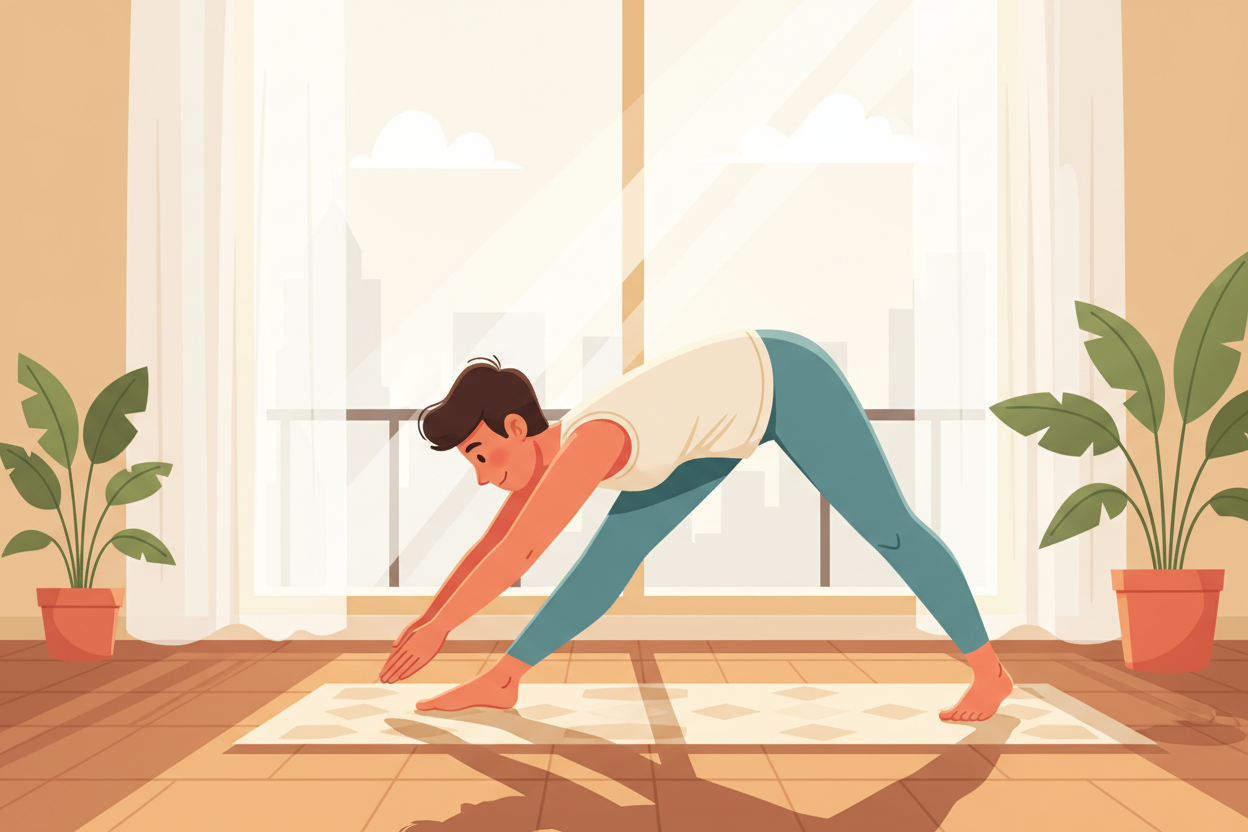
Ever peel yourself off the mattress feeling like a rusted hinge? I know that stiff, achy sensation all too well—where your back groans and your whole body begs for a reset.
That’s exactly why I crafted this short, powerful sequence. It’s designed to melt away that tension and send a surge of energy through you, so you can tackle your day with clarity and calm.
Yoga instructor Kassandra Reinhardt shares a great point on her YouTube channel: even a brief yoga practice can work out the kinks we collect overnight. I’ve taken that idea and refined it—especially since my last update in February 2025—to focus on your back and entire body for maximum relief.
I promise, you don’t need to be an expert. I’m here to guide you through every movement. Grabbing these few minutes for myself first thing completely changed my mornings. It lets me put my own needs front and center before the world starts making demands.
Key Takeaways
- This quick routine is designed to combat morning stiffness and boost your energy.
- It effectively targets your back and entire body for relief.
- The practice is based on accessible yoga principles, as highlighted by expert Kassandra Reinhardt.
- You don’t need any prior experience—every movement is explained for confidence.
- It’s a personal ritual that helps prioritize your well-being at the start of the day.
- The routine has been refined and updated as recently as February 2025.
- Consistency with this short practice can set a positive tone for your whole day.
The Power of a Morning Stretch Routine
It’s amazing how a few hours of stillness can leave your muscles feeling so locked up. Physical therapist Stephen Rapposelli explains this perfectly. He notes that your body stiffens overnight because your muscles and joints stay in one position for hours.
That’s why a dedicated awakening sequence is so essential for mobility. It counteracts that natural tightening. I’ve found this consistent practice helps me wake up my spine and shoulders, which often feel tight after a long night.
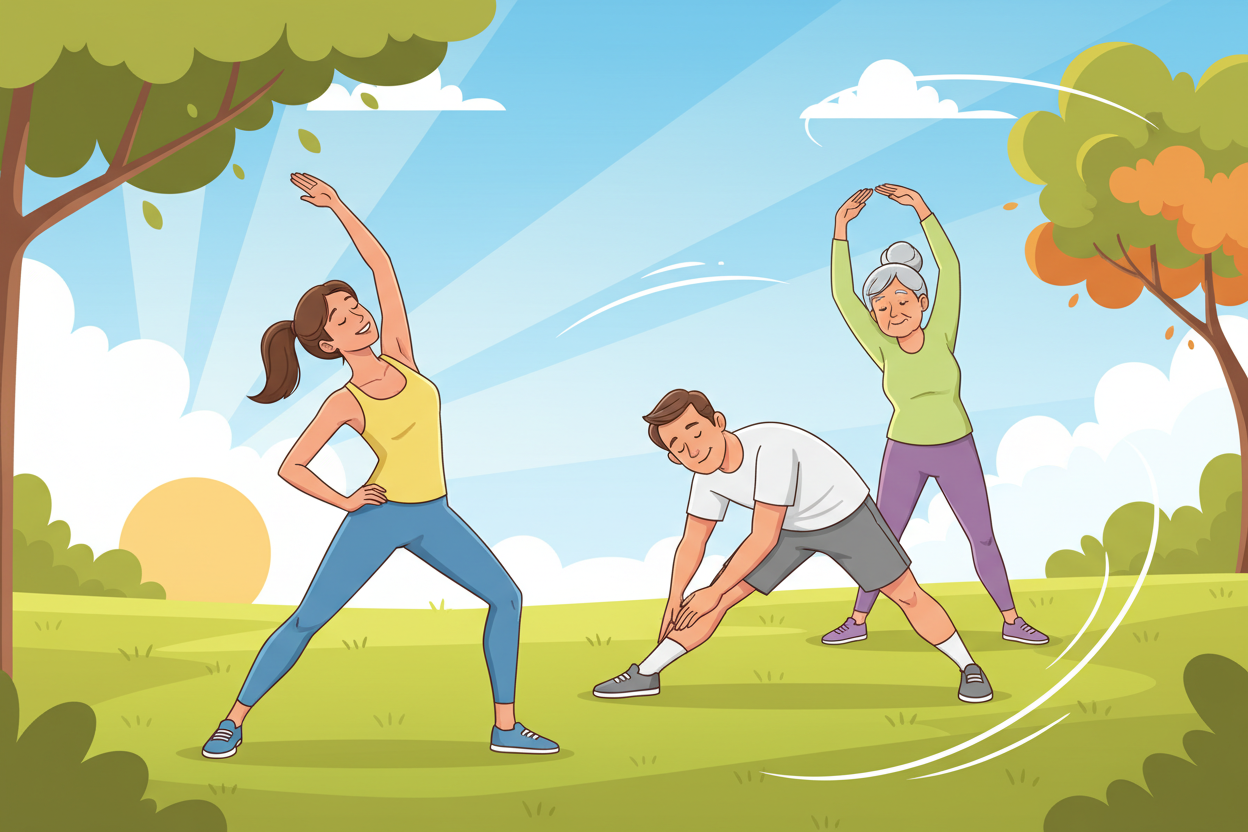
Boosting Energy and Awakening Your Body
This isn’t just about feeling less stiff. By focusing on your hips and back, you improve your circulation. That increased blood flow delivers oxygen and nutrients where they’re needed.
The result is a natural energy boost. You won’t need to rely on extra caffeine to get going. Gentle movement tells your system it’s time to start the day.
Fostering Mental Clarity and Mindfulness
The benefits go far beyond the physical. This stretching is a mindfulness practice. It creates a quiet space to check in with your mind and emotional state.
You start your day centered, not scattered. As of my latest update in November 2025, I recommend this approach to anyone. It reduces stiffness and improves your overall quality of life through gentle, daily movement.
Discover the “10 minute morning stretch routine” for Lasting Benefits
The science is clear: consistent, gentle stretching improves overall well-being. Studies show that just 5-10 minutes daily provides real benefits. Harvard Medical School highlights its importance for maintaining healthy joints. I’ve experienced this truth firsthand.
Enhancing Flexibility and Circulation
When you step onto your mat, you start a powerful session. This yoga practice improves your flexibility. It increases blood flow to your muscles.
I love how it opens my shoulders and spine. These areas get hunched from sitting all day. Moving your body from side to side encourages better circulation.
That means more oxygen reaches your tissues. You’ll feel more awake and present. It’s a simple way to care for your whole self.
Take a deep breath as you move through each pose. This directly helps my back and hips feel better. The lasting benefit is a body that moves freely.
Step-by-Step Techniques to Target Key Muscle Groups
Ready to dive into the moves that will loosen up your back, hips, and shoulders? Let’s break it down. I focus on one area at a time to make sure nothing gets missed.
This approach builds a strong foundation for your whole body. It turns a simple sequence into a powerful tool for mobility.
Neck, Back, and Spine Mobilization
I always start on my mat in a Tabletop position. Kassandra Reinhardt recommends this for the Cat-Cow flow.
Spread your hands wide and stack your knees under your hips. This protects your joints as you move.
Arch your spine up like a cat, then drop your belly towards the mat. This mobilizes your entire back beautifully.
| Pose | Target Area | Key Alignment Tip | Feeling |
|---|---|---|---|
| Cat-Cow | Spine & Back Muscles | Knees under hips, hands shoulder-width | Fluid, releasing tension |
| Lizard Pose | Hips, Front Thighs & Glutes | Drop back knee, lift chest | Deep hip opener |
| Downward-Facing Dog | Shoulders, Hamstrings, Spine | Pedal feet, shake head gently | Full-body lengthening |
Legs, Hips, and Shoulders Activation
Next, I move into Lizard Pose to open my hips. I lower my back knee and focus on dropping my hips down.
Lifting my chest opens the front of my body. It’s a fantastic way to target those tight glutes and thighs.
From there, I flow into Downward-Facing Dog. I pedal my feet and gently shake my head side to side.
This releases any leftover tension in my neck and shoulders. To deepen the stretch in my legs, I use my right hand to reach for my right foot.
This is a key part of any effective stretching routine for recovery. It wakes up your hamstrings after a long night.
Practical Steps for a Safe and Effective Stretch Routine
Before you begin, let’s cover some essential tips to protect your joints and enhance your experience. I want you to know this whole sequence is safe for everyone, including beginners over 50. You can always use props like blocks or a rolled towel for support.
Proper Warm-Up and Breath Control
Start by simply noticing your breath. Taking a few minutes to focus here makes all the difference. As you move your hands and knees on the floor, let each inhale and exhale guide you.
This mindful breathing helps you stay calm and centered. It prepares your muscles and joints for movement. Never push into pain, especially when targeting your neck, shoulders, or hips.
Modifications for Different Fitness Levels
Listen to your body—it’s your best guide. If a pose feels too intense, modify it. For example, you can place a pillow under your hips during Child’s Pose to support your back.
Blocks or towels are fantastic tools. They bring the floor closer to you, making yoga accessible. The goal is to feel good and improve your mobility over time, whether you’re following this stretch routine or a beginner abs workout.
Integrating Stretching into Your Daily Life
Let’s talk about how to weave this movement into the fabric of your daily life so it sticks. The real benefit comes from showing up consistently. That’s how you build lasting flexibility and make your body feel good.
Creating a Consistent Morning Habit
I promise, the best way to build this habit is to make it non-negotiable. Treat it like brushing your teeth. A simple trick? Place your mat where you can see the morning sun. That natural light energizes your nervous system and makes the whole experience more inviting.
When you are consistent with your yoga practice, you will notice a huge difference. Your back, hips, and shoulders will feel much looser and more comfortable all day long. I encourage you to keep your hands and feet moving every single day, even if you only have time for a few simple stretches.
Remember, building a strong routine takes time. Be kind to yourself if you miss a session. Just get back to it the next day. The goal is progress, not perfection.
Overcoming Challenges and Fine-Tuning Your Practice
Hitting a plateau or feeling persistent tightness is a normal part of the journey, not a failure. I’ve been there—when my usual flow just doesn’t seem to loosen my back or hips the way it used to. That’s when fine-tuning becomes your superpower.
Listening to Your Body’s Signals
Your body talks to you. A sharp pinch in your neck or a dull ache in your knees is it saying, “Hey, ease up!” I promise, this happens to everyone. The smart move is to listen and adjust your pose right away.
If a certain stretch causes discomfort in your shoulders or knees, don’t push through. You can always bend your knees more in a forward fold or come onto your forearms in a plank. This is your practice, so make it work for you.
For deeper guidance, I sometimes call the pros. If your back or hips stay stubbornly tight, the experts at StretchPlex are fantastic. I personally dial 302-696-5966 when I need a body coach to help fine-tune my approach.
| Common Challenge | What Your Body is Saying | Quick Fix |
|---|---|---|
| Tight Hamstrings | Strain behind the legs, can’t reach feet. | Use a strap or a long sock to loop around your foot. |
| Shoulder Pinch | Pain in the front or side of the shoulder. | Widen your hands on the mat and draw shoulders away from ears. |
| Lower Back Discomfort | Aching in the spine during forward bends. | Engage your core and focus on hinging from the hips. |
| Knee Pressure | Pain in or around the knee joint. | Place a folded towel under the knee for cushioning and support. |
Remember, props are your friends. A block can bring the floor closer. A pillow under your hips in Child’s Pose feels amazing. The goal is to feel safe and supported, so you keep coming back to your mat.
Conclusion
Let’s celebrate the commitment you’ve made to your own well-being. I hope this short yoga practice helps you feel more connected to your body and ready to tackle your day.
By consistently tending to your back, hips, and neck, you’re investing in your long-term mobility. This is a gift that keeps giving.
Remember, you don’t need to be perfect. Just showing up on your mat and moving your arms and legs is a huge win. Listen to what your body needs in each stretch.
I’m so proud of you for taking this time. Caring for your mind and body truly makes a difference in how you feel from the inside out.
Keep practicing. Enjoy the freedom that comes with a more flexible and energized life.