
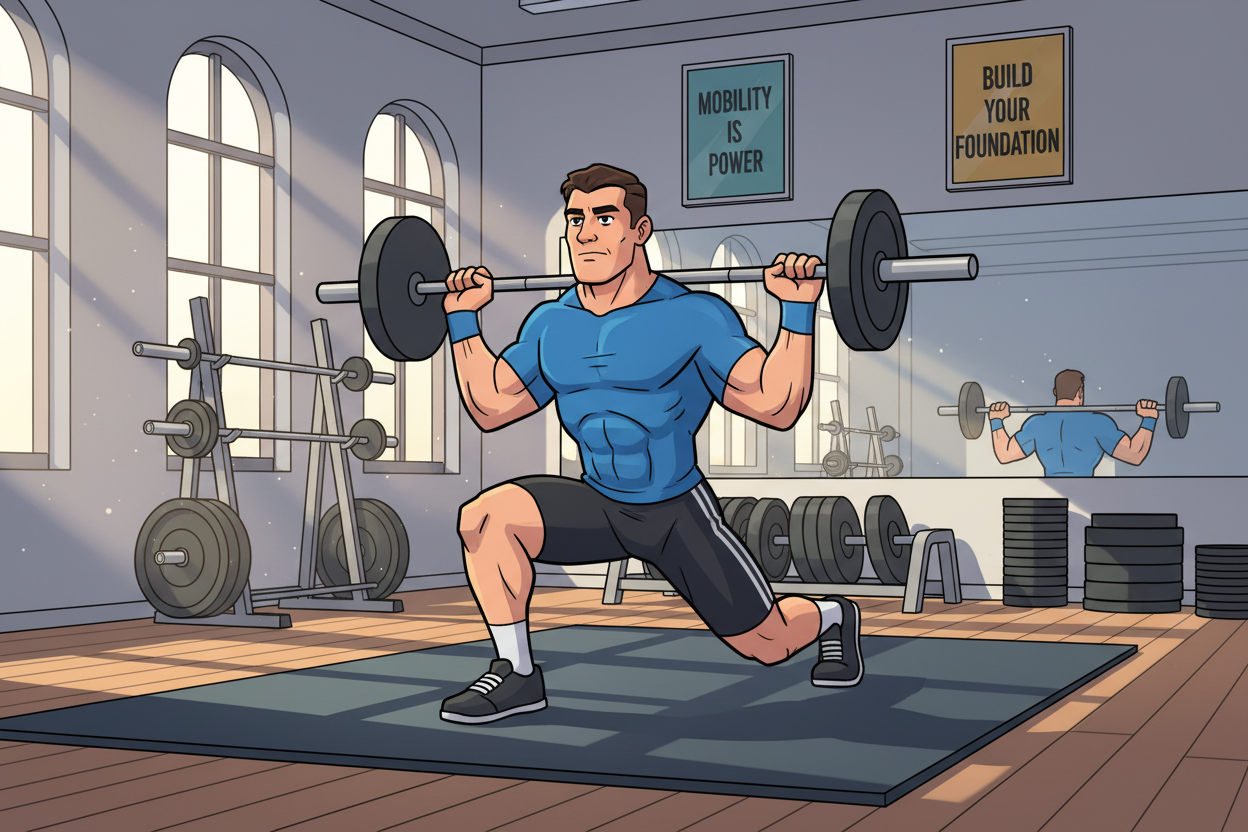
Ever feel like your body is fighting you during a heavy lift? That stiffness isn’t just annoying—it’s a barrier to your next personal record. I’ve been there, staring at the barbell, knowing I could lift more if my joints would just cooperate. The good news? A solid mobility routine for weightlifters is the game-changer you need.
Back in May 2024, new guidelines clarified what we athletes often overlook. True joint health is about your ability to sail through a full range of motion with control. This isn’t just stretching; it’s active preparation for the explosive demands of your training.
When you focus on this active control, you build a body that’s resilient. Your hips open up for a deeper, stronger squat position. Your upper back supports heavy overhead work, and your knees stay safe under load.
Let’s grab this opportunity to train smarter. I’ll show you how small, consistent efforts lead to massive gains in strength and stability. It’s about making your body an ally, not an obstacle.
Key Takeaways
- Mobility is the active ability of your joints to move through their full range.
- It is distinct from passive flexibility and is crucial for Olympic weightlifting.
- A focused approach improves your squat depth and overall positioning.
- Prioritizing joint health protects your shoulders and knees during heavy training.
- Consistent practice builds the stability needed for complex movements like the snatch.
- Dedicated work on your upper back and hips creates a strong, resilient foundation.
- Integrating these exercises leads to sustainable progress and helps prevent injuries.
Understanding Mobility in Weightlifting
Riley Stefan makes a great point. This sport isn’t just about raw strength—it’s about how well you can move through a full range of motion. Let’s break down what that really means for your training.
Defining Mobility Versus Flexibility
This is a big one. Flexibility is passive. Think about holding a static stretch. True mobility is your active ability to move freely and with control.
You need that active control to succeed in Olympic weightlifting. Mastering a movement like the snatch demands specific mobility exercises for your ankles and spine. It’s about usable motion, not just being bendy.
The Role of Joint Health in Lifting
I always say joint health is your foundation. It’s what lets you safely handle those heavy loads. Your shoulders and hips bear immense stress.
When you improve this, you teach your body to be more efficient. You build a resilient system that supports every lift. This focus protects you from common overuse issues and builds lasting stability.
Strong, healthy joints are the secret to long-term progress in the gym.
Common Mobility Challenges for Weightlifters
What if the biggest obstacle to your next PR isn’t strength, but simple stiffness? I’ve been there. We all face specific physical limits that block progress.
These common issues are totally normal. The good news? They’re also very fixable with the right focus.
Tight Hips and Hamstrings
I struggled with this for years. Sitting all day locks your hips up. It makes your squat shallow and strains your lower back during deadlifts.
Your hamstrings pull on your pelvis. This compromises your starting position. It’s a classic hurdle for many athletes.
Stiff Shoulders and Thoracic Stiffness
This one kills overhead movements. When your upper back muscles are tight, you can’t keep an upright torso.
That heavy overhead squat becomes a battle. Your shoulders lose the necessary range of motion for safe lifting.
Here’s a quick breakdown of these primary barriers:
| Challenge | Primary Impact | Proactive Tip |
|---|---|---|
| Tight Hips & Hamstrings | Limits squat depth, strains lower back | Incorporate dynamic lunges pre-workout |
| Stiff Shoulders | Reduces overhead positioning ability | Focus on scapular mobility exercises |
| Thoracic Stiffness | Compromises upright torso in the squat | Use foam rolling for the upper back |
Research shows smart strength training can cut overuse injuries by 50%. That’s why I’m so passionate about tackling these limits head-on.
Addressing them unlocks the full range of motion you need. It’s the key to better performance and staying in the game.
mobility routine for weightlifters
Zac Marion, DPT, hit the nail on the head. He suggests that even ten reps of this work can lead to noticeable improvements.
That’s the power of a consistent plan. Making it a non-negotiable part of your training day is the best way to ensure you stay in the game.
Marion also explains that adding load to your drills can activate your central nervous system before you lift. I treat my prep with the same focus I bring to my main strength sessions.
I recommend at least 10 minutes. This ensures your body is fully prepared for the heavy work ahead.
Your plan must address specific needs. Focus on your ankles, hips, or upper back muscles. A structured approach yields real benefits.
| Element | Purpose | Time Commitment |
|---|---|---|
| Dynamic Activation | Prepares joints & increases range of motion | 3-5 minutes |
| Loaded Drills | Activates CNS for better stability in the squat | 3-4 minutes |
| Targeted Focus | Addresses individual stiffness in shoulders or hips | 3-5 minutes |
Follow a blueprint like this. You’ll notice your ability to hit a deep squat improves in weeks.
Don’t be afraid to adjust as you get stronger. We want to help you move better. Pair this active work with an effective stretching routine for muscle recovery for complete care.
Key Mobility Exercises and Drills
I used to skip these exercises, until a nagging shoulder pain forced me to change. Now, they’re the non-negotiable foundation of my training day. Let’s break down the most effective drills for your body.
Hip and Ankle Mobility Techniques
Your squat depth depends on your hips and ankles. The 90/90 hip stretch is my go-to for improving rotation. It directly targets the external rotation you need for an upright position.
For your ankles, try dorsiflexion drills. Press your knee forward over your toe while keeping your heel down. This builds the stability and range of motion for a deep, strong squat.
Spine and Shoulder Drills
A stiff upper back kills overhead movements. The Cat-Cow stretch is fantastic for mobilizing your spine. It preps your body for the bracing required in heavy lifting.
For your shoulders, try a thoracic opener on a bench. This helps release tension in your lats and upper back muscles. It’s crucial for Olympic weightlifting movements like the snatch.
Hold each stretch for 30-45 seconds. Move with control and focus on your breathing. These mobility exercises will make your workouts more productive and safe.
Integrating Mobility into Your Weightlifting Training
Think of your warm-up as the bridge between your daily stiffness and your explosive lifting potential. Making this work a non-negotiable part of your training day is how you prioritize long-term health alongside immediate performance goals.
Warm-Up and Dynamic Stretching
I always start with dynamic stretching. It gets blood flowing and prepares your muscles for heavy loads.
This isn’t about holding static poses. It’s about active movement that increases your range of motion.
Perform leg swings and arm circles. These simple drills activate your hips and shoulder joints. They send a clear signal to your body that it’s time to perform.
Here’s how a proper dynamic approach stacks up against rushing:
| Approach | Typical Actions | Likely Outcome |
|---|---|---|
| Rushed Warm-Up | A few half-hearted stretches, then straight to the bar. | Cold muscles, poor positioning, higher risk of strain. |
| Dynamic Warm-Up | Targeted exercises like hip circles and cat-cow. | Improved flexibility, better stability for Olympic weightlifting, and primed nervous system. |
By focusing on these movements, you prepare your body to handle explosive lifts. Your squat position feels more secure.
We encourage you to listen to your body each day. Adjust your prep if you feel tight.
Consistent integration builds resilient athletes. It leads to better results in your workouts and a much lower injury risk over time.
Weighted Mobility Training for Enhanced Performance
What if the secret to a rock-solid overhead position wasn’t more stretching, but adding a little resistance? This approach builds strength exactly where you need it most.
I call it training your body’s active control. You’re not just reaching a position—you’re owning it.
Benefits of Adding Load to Your Drills
Weighted drills are a game-changer. They build strength in the very positions where you are often the most vulnerable.
When you add a light dumbbell, you teach your muscles to stay active. This improves stability through your full range of motion.
I’ve seen athletes transform their overhead stability with weighted arm bars. They target the shoulders and upper back muscles perfectly.
Research shows that strength training can reduce the risk of developing diabetes by up to 30%. The benefits truly go beyond the gym.
You don’t need to go heavy. A light weight provides the feedback your body needs to improve its movement patterns.
Adding load bridges the gap between being flexible and being truly mobile. This is essential for elite olympic weightlifting.
| Exercise | Primary Focus | Key Benefit |
|---|---|---|
| Weighted Arm Bar | Shoulders & Upper Back | Improves overhead positioning for the snatch |
| Goblet Squat Hold | Hips & Ankles | Builds strength in the deep squat position |
| Dumbbell Overhead Carry | Full-Body Stability | Teaches control under load, enhancing joint health |
Start with a weight that feels substantial but lets you keep perfect form. Challenge your body to create a more resilient system.
This method prepares you for intense training sessions. Pair it with top bodyweight exercises for strength for a complete, powerful approach.
Advanced Mobility Strategies and Tools
Let’s talk about the unsung heroes of my gym bag: the simple tools that unlock my best lifts. I used to overlook them, but now I rely on a few key items. They make targeting specific areas of stiffness so much easier.
Using Foam Rollers and Resistance Bands
My foam roller is a total game-changer for recovery. It helps break up tight knots in my muscles through myofascial release. This process improves elasticity and gets me ready for heavy training sessions faster.
Resistance bands are perfect for creating tension during your mobility exercises. I use one to achieve a deeper range of motion in my shoulders. You can also use a band for distraction during ankle stretches, which helps you get deeper into your squat position.
Don’t forget tools like massage balls or mobility sticks. They’re investments in your joint and muscle health. Experiment to see what works best for your unique body and goals. Consistency with these tools supports your overall progress in weightlifting.
Practical Daily Mobility Routine for Lifters
The most transformative habit I’ve adopted isn’t a new lift—it’s a simple daily practice. This consistent work improves your joint health and overall performance more than you might think.
Dynamic Movement for Pre-Workout Activation
I start my training day by waking up my body. Gentle wrist and knee circles get everything moving.
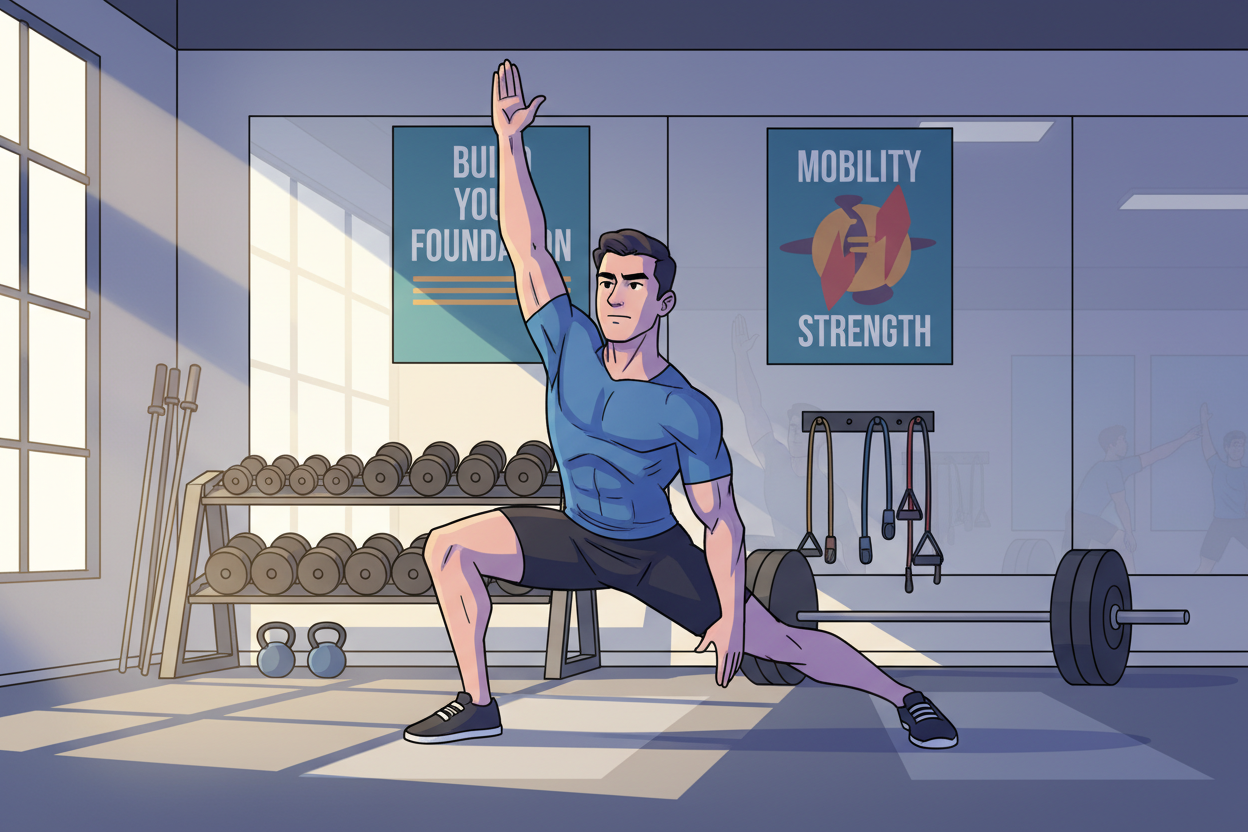
Then, I do walking lunges with a twist. This engages my hips and thoracic spine at the same time. It’s perfect preparation for the heavy loads ahead.
Post-Workout Static Stretches
After my workouts, I shift focus. A seated hamstring stretch helps my muscles recover and lengthen.
I always spend time in pigeon pose. It maintains healthy hips for a better squat position. I do a little of this every single day, even on rest days.
Keep your plan simple and practical. Track your progress in a notebook. Seeing your range of motion improve is a huge motivator.
Your body is your most important equipment. Treat it with care every day.
Avoiding Common Pitfalls in Mobility Training
Early in my journey, I learned some lessons the hard way—mistakes that cost me time and performance. Let’s be smart and sidestep these errors so your training stays on track.
Overstretching and Ignoring Pain Signals
One big error is overstretching. This can cause muscle strains instead of better mobility. You must feel the difference between a good stretch’s discomfort and sharp pain.
Never ignore your body’s signals. Pushing through pain is a recipe for disaster in Olympic weightlifting. Ignoring warnings can lead to serious injuries, setting you back for months.
I always tell my friends to focus on quality over quantity. A few perfect movements beat many sloppy ones every time. This builds real strength and stability.
Skipping your warm-ups leaves you vulnerable. It invites unnecessary injuries that were totally preventable. Your workouts need that prep time.
We encourage you to seek a coach if you’re unsure. Professional guidance refines your technique for overhead work and squats. It protects your joint health.
Avoiding these pitfalls keeps your plan safe and effective. Progress in flexibility is a marathon, not a sprint. Be patient, and you’ll build a resilient body for the long haul.
Conclusion
Transforming your movement is the most valuable investment in your athletic future. We’ve explored everything from fundamental exercises to advanced strategies. You now possess a complete roadmap for your journey.
Adopting a comprehensive plan safeguards your physical body and develops genuine strength. Understand your individual challenges and customize your training. Consistency remains the essential ingredient—continue showing up.
Remain patient and attentively listen to your body. Prioritize long-term health over immediate gym gains. I’m absolutely confident you’ll observe substantial improvement in your performance and range of motion.
You hold the power to transform your movement quality. Go crush your next training session with complete confidence.