

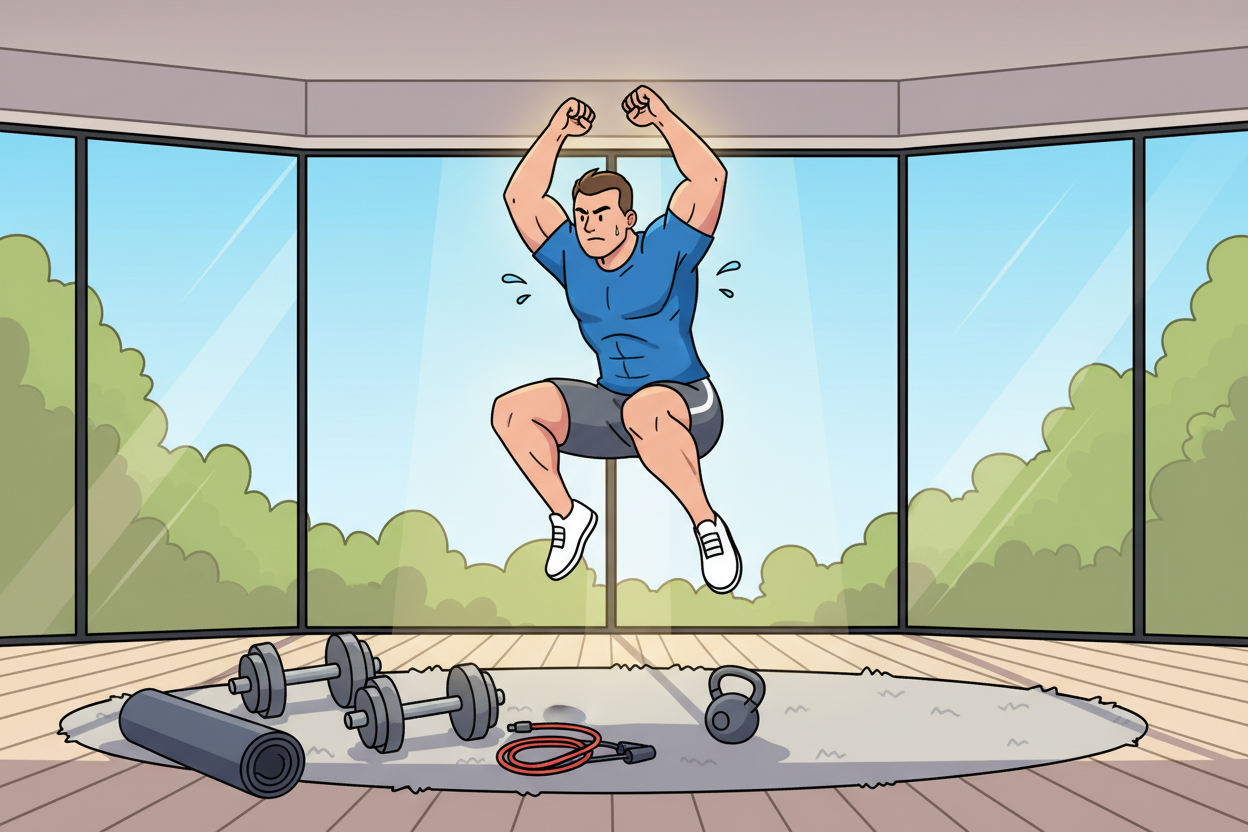
Does your current routine leave you craving a real spark—that burst of energy and strength that makes you feel unstoppable? I know that feeling all too well. That search for a genuine shift is why I built this session for your living room.
Kat Paslé-Green, a CPT in San Francisco, describes plyometrics as movements built on rapid muscle stretching and contracting. This isn’t just gym jargon; it’s the secret to moving through your entire day with more spring and less effort.
My goal here is simple: to strip away the complexity. We’re going to focus on intentional movement, where how you move matters far more than how much. This is your guide, whether you’re taking your first step or have been training for years.
Let’s build a stronger, more resilient version of you—together. It all starts with understanding the ‘why’ behind each jump, each push, each powerful move.
Key Takeaways
- Plyometrics use quick muscle actions to improve your efficiency in daily life.
- This routine is designed to be accessible for all fitness levels.
- Success comes from focusing on movement quality, not just quantity.
- You can do the entire session without any special equipment.
- Building consistency with this method leads to sustainable progress.
- Safety and proper form are emphasized to keep you injury-free.
- The ultimate aim is to create a more capable and confident you.
Understanding Explosive Workouts and Their Benefits
You might think rapid, forceful movements are just for sports stars, but their real value shows up in your everyday actions. This type of training is about building a body that responds quickly and confidently, no matter what the day throws at you.
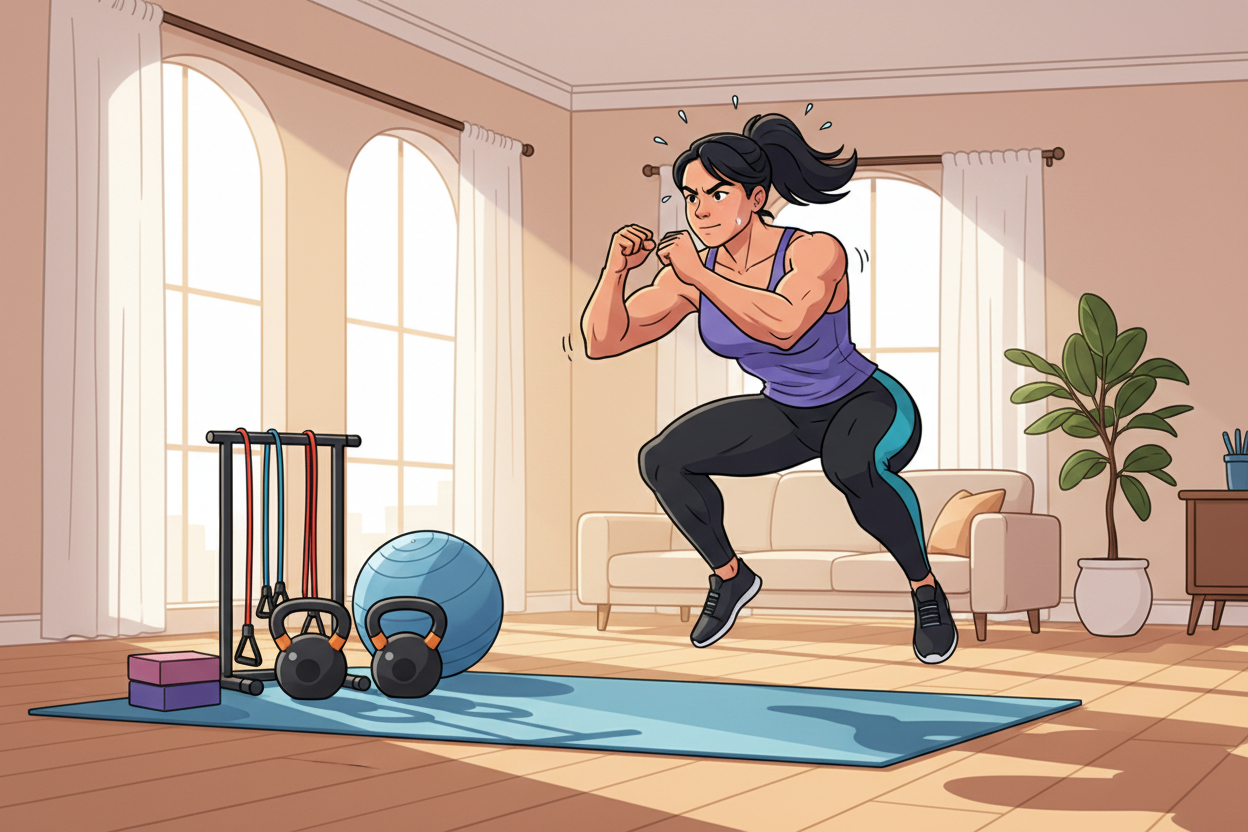
Real-Life Applications of Explosive Training
Kat Paslé-Green gives a perfect example. She notes that plyometrics help you react promptly to prevent a fall after catching your toe on a curb. That’s the core of it.
This practice isn’t just for the elite athlete. It’s a tool for navigating daily life more safely. It prepares you for sudden moves, like grabbing a kid before they tumble or shifting your weight to keep your balance.
How Explosive Movements Enhance Performance
The American Council on Exercise defines explosive strength as producing a maximal amount of force in a minimal amount of time. In simple terms, it’s your ability to generate strength fast.
We measure power as the product of force and velocity. You can improve your output by either moving with more speed or lifting more weight. The benefits here are huge.
You’ll gain better coordination and reaction time. This keeps you ready for the unexpected. Adding these movements is a smart move for anyone, no matter your starting point.
Explosive Power Workout at Home: Getting Started
Karlie Booker, a certified pro trainer, insists that every client begins their plyometric journey with one non-negotiable step. It’s not about lifting heavy or moving fast right away. It’s about the space you’re in.
I learned this the hard way early on. A cluttered room leads to a cluttered mind—and risky moves.
Essential Equipment and Space Setup
Karlie, who works at the Pro Club in Washington, makes all her clients do this type of training. Her first rule? Have a clear area where you can move your body freely.
You don’t need a fancy gym. Most movements require only your own body weight and some floor space. That’s it.
Make sure your feet have solid traction. This prevents slipping during jumps or quick hops. A yoga mat or bare feet on a clean, dry floor often works best.
Creating a Safe Environment
Safety means removing any obstacles. Push coffee tables aside and secure loose rugs. This lets you focus entirely on your technique.
If you’re working with a pro, they’ll advise starting simple. Master the basic patterns before adding any external weight. This foundational work builds confidence and prevents injury.
Your home is your gym now. Setting it up right is your first real win.
Mastering Proper Form and Technique
Keith Hodges, a top coach in Los Angeles, has a rule he never breaks: before you learn to jump, you must learn to land. I love this approach. It shifts the focus from how high you can go to how well you can control your body. That control is the real foundation of safe, effective training.
Getting your form right isn’t just about safety—it’s what makes your effort count. When your technique is solid, every rep builds strength more efficiently.
Focusing on Landing Mechanics
Keith insists that mastering your landing is the single most important skill for injury prevention. Think of it as your body’s shock absorber system. A good landing is soft and quiet, not loud and jarring.
Your knees should track over your toes, not cave inward. Engage your core to keep your upper body sturdy. This proper form helps you absorb impact and protects your joints.
Avoiding Common Form Mistakes
Small errors in your movement pattern can lead to big problems over time. The most common mistake is letting the knees collapse inward during a landing. This puts awful stress on the joints.
Another error is landing with stiff legs, which sends shock right up your body. The table below breaks down these common pitfalls and the proper technique to use instead.
| Common Form Mistake | Proper Technique | Why It Matters |
|---|---|---|
| Knees collapsing inward | Knees aligned over toes | Protects knee joints from unnecessary stress |
| Stiff, loud landing | Soft, quiet landing | Absorbs shock to save your muscle tissue |
| Loose, relaxed core | Core braced and sturdy | Stabilizes your spine and improves power transfer |
If you’re unsure, record a video of yourself or ask a pro for feedback. By focusing on quality, you protect your muscle and ensure you can train consistently for the long haul.
Incorporating Plyometric Moves for Explosive Strength
The beauty of plyometrics is in the variety; you have 16 stellar options to mix and match for your goals. This isn’t about doing them all at once. It’s about choosing the right exercises to build the specific strength and power you want.
Key Plyometric Exercises to Try
I love having choices. With 16 different movements, you can tailor your training to your current ability. For example, the squat jump is a classic. It places a heavy emphasis on your lower body and core stability.
When you perform this movement, make sure you land softly on the balls of your feet. This minimizes impact on your joints. You can generate more force and speed by using your arms for momentum.
Each next rep should have your full focus. Consistent technique ensures your power output stays high. Here are a few stellar exercises to start with:
- Pogo Hops
- Squat Jumps
- Burpees
- Lateral Bounds
- Plyo Push-ups
Start with one or two. Master the form. Your body will learn to recruit muscle fibers more efficiently. That’s how real strength is built.
Building Speed and Power Through Jump Training
A 2016 study on soccer players revealed a surprising fact: sled sprints beat traditional jumps for building raw speed. This is where the magic happens! Your training shifts from just getting air to moving your body with intention and velocity.
Examples of Explosive Jumps
Think beyond height. A classic squat jump is a perfect example. The goal is to drive through your feet and leave the ground as fast as possible.
You can also build overall pace with short sprints. Try 10 to 40 meters on a track or in a park. This method directly improves your athletic speed, as the study showed.
Use a box to measure progress. Start with a height of just a few inches. This ensures your form and technique stay perfect as you push for more power.
Techniques for Faster Movements
Focus on the transition time. This is the moment your feet hit the ground until your next rep begins. Shorter contact means more efficient movement.
Make sure your legs are ready to rebound instantly. Drive your body upward with force from your hips and core. This quick rebound is key for all your jumps.
Combine these exercises with other movements. You create a comprehensive plan that boosts both speed and strength. Remember, proper recovery is part of smart training. An effective stretching routine supports this work perfectly.
Strength and Conditioning Through Explosive Movements
A 2017 review of young competitors revealed a key insight: plyometric drills beat traditional lifting for boosting leap height. This tells us something vital. True athletic development isn’t just about one type of training.
It’s the blend of raw strength and sharp conditioning that creates real ability. Conditioning your body to handle these forces needs a balanced plan.
You must mix heavy resistance with high-velocity movement. Your strength grows as you get better at recruiting muscle fibers fast. Think of a powerful squat or a quick bound.
For any athlete, choosing the right focus is crucial. This table breaks down the core approaches:
| Modality | Primary Focus | Ideal For |
|---|---|---|
| Heavy Strength Training | Maximal Force Output | Building Raw Muscle Strength |
| Plyometric Training | Rate of Force Development | Improving Jump Height & Speed |
| Combined Approach | Strength & Conditioning Synergy | Overall Athletic Performance |
By integrating these methods, you do more than build tissue. You condition your nervous system to react with more speed and power. This holistic upgrade is what helps athletes of all levels perform their best.
Safety Guidelines and Effective Warm-Up Routines
Safety isn’t just about avoiding injury; it’s about setting the stage for your best performance every single time. Jumping into a session cold is a surefire way to limit your output and increase risk. I learned this through trial and error. A proper start transforms your entire experience.
Preventing Injury with Proper Preparation
Your body needs a signal that it’s time to work. A thorough warm-up prepares your muscle tissue and nervous system. This is the best way to prevent strain.
If you feel any sharp pain during an exercise, stop immediately. Reassess your form or the intensity. Even experienced athletes treat this as non-negotiable.
Effective Warm-Up Strategies
A good routine uses dynamic movement. Mimic the exercises you plan to do. This primes your legs and hips for action.
Here is a simple framework to follow:
- Start with 5 minutes of light cardio, like jogging in place.
- Perform controlled squat variations and leg swings.
- Include light hops to practice jump technique without force.
- Make sure your entire body feels warm and ready.
This preparation builds a foundation for strength and keeps your training sustainable. Your future self will thank you.
The Role of Reps, Sets, and Rest in Explosive Training
I used to think more reps always meant better results, until I learned how crucial smart rest periods truly are. This part of your plan is the engine for real progress.
Optimizing Your Repetition Schemes
When your goal is power, keep your reps low and your effort high. This lets you keep perfect form every single time.
If you add weight, the American Council on Exercise suggests using 40-75% of your one-rep max. Aim for 3-4 sets of each exercise. Give yourself 2-3 minutes of rest between them.
This full recovery lets your nervous system reset. It prepares your body for the next powerful movement. The table below shows how to structure your training for different goals.
| Training Goal | Recommended Reps | Recommended Sets | Rest Period |
|---|---|---|---|
| Maximal Power | 3-5 | 3-4 | 2-3 minutes |
| Strength & Power | 5-8 | 3-4 | 2-3 minutes |
| Muscle Conditioning | 8-12 | 2-3 | 60-90 seconds |
| Skill Practice | 1-3 | 2-3 | As needed |
If your technique starts to slip, do fewer reps or take more rest. Make sure quality always beats quantity. Rushing through the work won’t build strength or muscle safely.
This approach keeps your body fresh and your training effective. It’s a smarter way to get lasting results from your explosive sessions.
Integrating Explosive Workouts Into Your Weekly Routine
I learned about frequency the hard way—by doing too much, too soon, and paying for it. Soreness became my constant companion, and progress stalled. The real win is fitting this dynamic training into your life so it builds you up, not burns you out.
Adjusting Workout Frequency and Intensity
Your body needs time to recover from high-impact movement. You should not do this type of training every day. A 2018 study showed that high-intensity bike intervals improved cardio but did not improve 30-meter sprint performance.
This proves training specificity matters. If you want better sprint speed, you must practice sprinting. The same logic applies here.
Start by adding these exercises one or two days a week. See how you feel. Make sure you listen to your body. If you’re overly sore, take an extra rest day.
Here’s a simple plan to begin:
- Focus on perfect form and technique over high reps.
- Perform 2-3 sets of each movement with full recovery.
- Engage your legs and hips for safe landings.
- Consistency over time is the secret to building real strength.
Build a sustainable routine you can stick with for the long haul. That’s how you create lasting change.
Tips for Tracking Progress and Making Adjustments
Ever feel like you’re putting in the work but not seeing changes? A simple log can reveal the patterns you’re missing. I used to guess how I was doing, and my results were all over the place. Now, I track a few key things. It keeps me honest and shows me exactly where I’m getting stronger.
Using Performance Metrics to Measure Success
I recommend keeping a basic notebook for your training. Write down the exercises, how many reps you did, and the weight if you used any. This isn’t about complex data. It’s about seeing a clear line of improvement over time.
You can measure success by tracking your jump height or your sprint speed. Can you do more reps with perfect form this week? That’s a win. These metrics turn hard work into visible progress.
Listening to Your Body for Continuous Improvement
Your body gives the best feedback. If your speed plateaus, it might be time to adjust your volume. Maybe you need more rest or a different training focus. Always listen to those signals.
Celebrate the small wins along the way. Consistent, smart adjustments build real strength. This journey is about continuous improvement, not overnight perfection.
Explosive Exercises Beyond Traditional Jumping
My own progress hit a plateau until I realized I was ignoring half of my body’s potential. I was so focused on my legs and jumps that my upper half was lagging. True athletic development happens when you train your entire body as one connected unit.
Dynamic Upper-Body Explosive Movements
This is where plyometric pushups become a game-changer. They build the ability to generate force quickly. This is essential for sports that involve throwing or pushing an object.
The best part? You need zero equipment. Your own body weight provides all the resistance you need. It challenges your chest, shoulders, and triceps in a whole new way.
Make sure your hand placement is correct to support your weight. Your goal is to launch yourself off the floor with control during each rep. Perfecting this technique is more important than how many reps you do.
You can weave these exercises into your training easily. Alternate them with lower-body moves. This creates a balanced, full-body session that builds comprehensive strength.
Conclusion
This isn’t the end of a routine—it’s the beginning of a new relationship with what your body can do.
You now have all the tools to build real strength right where you are. Remember, consistency and proper form are your best allies.
Listen to your body’s signals. Whether you’re an athlete or just want to move better, these movements will help you reach your goals.
Keep challenging yourself with progressive bodyweight exercises for strength. Stay patient and enjoy becoming a stronger version of yourself.
I’m excited to see you crush your goals and discover your true potential.