

Does your upper body progress feel permanently stuck on a frustrating plateau? That sensation where effort doesn’t translate to change is more common than you think—and I have the simple key to break through.
After nearly 18 years as a personal trainer and writer, I’ve tested thousands of routines. The truth? You don’t need a room full of fancy gear to build impressive, boulder-like delts. One versatile weight is often the most powerful tool for reigniting serious growth.
This session is built on pure efficiency and intensity. Every single rep you perform will directly fire up those muscles, pushing you toward a stronger, more defined physique. I’m here to cut through the confusion and make your fitness journey straightforward.
Let’s grab that dumbbell and transform your approach together. It’s time to work smarter and finally see the results you’ve been chasing.
Key Takeaways
- You can break through upper body plateaus with minimal equipment.
- A single weight, used correctly, is a highly effective tool for muscle growth.
- This routine prioritizes efficiency, ensuring every rep delivers maximum value.
- No expensive gym membership or complex setup is required for real results.
- The plan is designed to be straightforward, cutting through common fitness confusion.
- Focusing on intensity and proper form is more important than the amount of gear you have.
- This approach is about working smarter to build a stronger, more defined physique.
Benefits of a Single Dumbbell Shoulder Workout
Training with minimal gear isn’t a limitation—it’s a strategic advantage for serious muscle development. I’ve seen it time and again: simplifying your tools forces a deeper focus on the fundamentals that create real change.
Improved Stability and Coordination
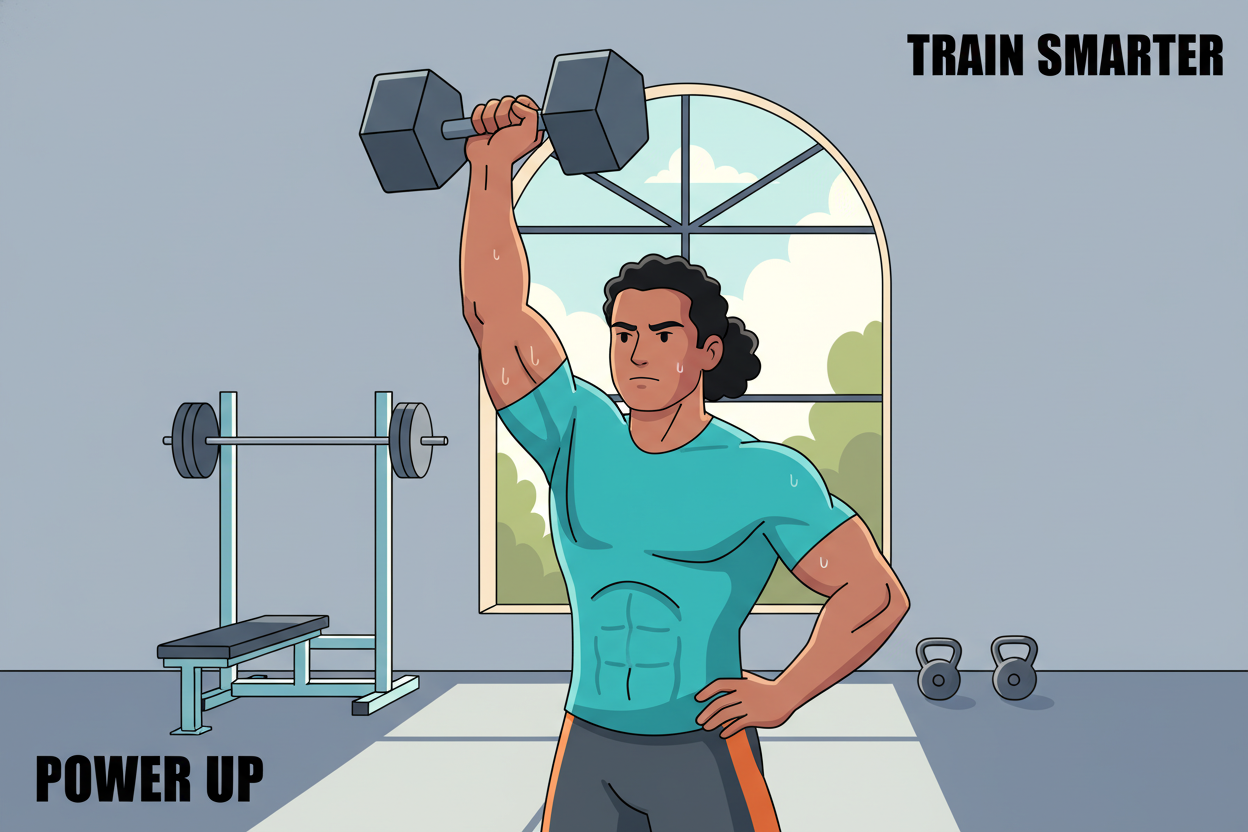
When you press a weight overhead while standing, your entire core must fire to keep you upright. This isn’t just about your delts; it’s a full-body challenge. Your midsection works overtime to maintain balance, building rock-solid stability that translates to everything you do.
This functional approach is far superior to leaning on a bench for support. It helps identify and correct strength imbalances between sides, ensuring symmetrical development over time. You’re not just lifting—you’re mastering control.
Efficient Muscle Activation at Home
Limited equipment removes distractions and forces precision. The secret to long-term growth and joint health lies in the quality of each repetition, not the quantity of gear you own.
By ditching the backrest, you engage your entire upper body network. A simple press becomes a comprehensive test of your coordination and raw strength. You’ll feel your physique working as one integrated system, which is where true progress happens.
Essential Techniques for a Safe Shoulder Workout
I’ve learned the hard way that ignoring technique is the fastest route to an injury setback. A tweaked joint can stop progress for weeks. Let’s build strength the right way—by making every rep count safely.
Think of form as your secret weapon. It protects you and makes the muscle work harder. Good technique turns a simple lift into a precise, growth-stimulating movement.
Proper Starting Position and Form
Your foundation is everything. Always begin in a neutral stance, feet shoulder-width apart. Grip your weight firmly and keep your core braced before you move.
Focus on the scapular plane. This means your arms move at a slight forward angle, not directly out to the sides. It’s your body’s natural, strongest path.
Keep those elbows tucked forward during presses. This is a safer position for the shoulder joint. It prevents pinching and directs force efficiently.
Common Mistakes to Avoid
The biggest error? Flaring your elbows out wide like wings. This strains the front of the shoulder and invites pain. Keep them under control.
Never arch your lower back to heave a weight up. A tight core is your best defense against this. If your form crumbles, it’s a signal.
Drop the weight and reset. The goal is to stimulate growth, not to ego-lift. Listening to your body is the mark of a smart lifter.
The Science Behind Dumbbell Shoulder Exercises
Data doesn’t lie, and when it comes to building powerful delts, the research points firmly in one direction. I always check the data before designing any routine—it cuts through the guesswork.
A compelling 2013 EMG analysis revealed something game-changing. Standing presses elicit 8% greater front, 15% greater lateral, and 24% greater rear delt activation than seated versions.
Yes, you might lift around 10% less weight when standing. That’s the trade-off. But the payoff is a much higher level of recruitment for your shoulder muscles and core stabilizers.
Science tells us the stabilization demand is the primary reason for this spike in activation. Your body has to work as a unified system, making these exercises a smarter choice for growth.
Understanding these biomechanical facts helps you prioritize movements for a powerful, balanced physique. This same principle applies when building a complete dumbbell chest workout for upper body symmetry.
Guide to Shoulders and Muscle Anatomy
Understanding your anatomy is the first step toward crafting a balanced and injury-resistant physique. I always tell my clients—knowing what you’re training changes everything.
Understanding the Deltoid Muscles
Your deltoid isn’t one single muscle. It’s a trio of heads working together. You have the front (anterior), side (lateral deltoid), and rear (posterior deltoid).
Most folks overdevelop the front from constant pushing. That’s why focusing on the side and rear heads is crucial for a sculpted, powerful look.
The Role of the Rotator Cuff in Shoulder Health
Beneath those powerful delts lies your rotator cuff. This group of small muscles is your joint’s stabilizer. Never neglect it.
Ignoring any of the three deltoid heads sets you up for poor posture and a higher injury risk. A balanced physique isn’t just about looks.
It’s about making sure all your muscles work in harmony for every lift and daily move.
Step-by-Step Shoulder Workout with Just One Dumbbell
Let’s transform that single weight into a complete delt-building system right in your living room. I want to show you how to put all that anatomy and science knowledge into a powerful, actionable plan.
Setting Up Your Home Gym
Your “gym” needs just a few square feet of clear floor. That’s it. This simplicity is liberating—no commute, no waiting for equipment.
Grab your one piece of gear and a water bottle. You’re ready to go. This minimal approach forces you to focus entirely on the movement, not the machinery.
Exercise Execution and Transition Tips
Quality beats quantity every time. For each rep, nail your starting position and move your arms through a full, controlled range.
Move swiftly between exercises. This keeps your heart pumping and adds a potent metabolic burn. Your session becomes efficient and challenging.
Follow this structured flow for a balanced, effective workout:
| Movement | Primary Focus | Key Form Cue |
|---|---|---|
| Standing Press | Overall Strength & Power | Brace core, press straight up |
| Lateral Raise | Lateral Deltoid Width | Lead with elbows, control descent |
| Bent-Over Reverse Fly | Rear Deltoid Development | Hinge at hips, squeeze shoulder blades |
I strongly recommend keeping a simple log. Track your reps and weight. Seeing your strength improve over time, even with one dumbbell, is incredibly motivating. Stay crisp on form, especially when the burn hits in those final exercises.
Incorporating Power Moves and Rest-Pause Techniques
I’ve found that the real magic happens when you combine raw power with relentless fatigue. This one-two punch shocks your system into new growth.
Explosive Movements with the Dumbbell Push Press
To build athletic power, I rely on the push press. This move lets you use your legs and core to drive the weight overhead.
It teaches your entire body to work as a single, explosive unit. Remember to brace your core and take a big breath before each rep. This protects your spine under the load.
Utilizing Rest-Pause for Enhanced Muscle Fatigue
The rest-pause method is brutal but brilliant. You perform 5 sets of 25 reps with only 2 minutes of rest between them.
This protocol forces massive fatigue. Your muscles recruit every available fiber to keep going.
It’s the key to smashing through strength plateaus. I love finishing a session with this technique. It leaves your delts fully exhausted and primed for growth.
Enhancing Time Under Tension for Maximum Growth
I used to rush through my reps until I discovered the power of slowing things down. That simple shift transformed my results—and it can do the same for you.
Time under tension (TUT) is the secret weapon for hypertrophy. It’s not about how much you lift, but how long your muscles are under strain.
Implementing Controlled Eccentric Movements
The eccentric phase is when you lower the weight. Controlling this descent is crucial for your shoulder development. A slow tempo forces your muscle fibers to work harder.
This creates greater micro-tears, leading to more growth. I always tell my clients: the way down is just as important as the way up.
Focus on a full range of motion with a deliberate tempo. You can get more from a lighter dumbbell than someone swinging heavy weights around.
This approach is perfect for home sessions. You don’t need massive plates to stimulate serious development.
| Exercise | Recommended Tempo | Primary Focus |
|---|---|---|
| Overhead Press | 3-1-1 | Maximize eccentric control |
| Lateral Raise | 2-1-2 | Sustained lateral delt tension |
| Bent-Over Fly | 3-1-1 | Deep rear delt engagement |
See the pattern? The first number is the lowering count. Make those seconds count for maximum growth!
Tailoring the Workout to Your Fitness Goals
Let’s be honest: chasing strength looks very different from chasing size, and your plan should reflect that. The same single piece of gear can be your tool for raw power or sculpted muscle—you just need to know how to adjust the dials.
Strength vs. Hypertrophy Focus
If pure power is your target, think low and heavy. Aim for sets of 4-6 reps with the heaviest weight you can handle while keeping flawless form. This builds dense, resilient strength.
Chasing hypertrophy? Flip the script. Go for 8-12 reps per set with a challenging load. Keep rest periods tight, around 60 seconds. This creates the metabolic stress that sparks growth.
Both paths are valid. Your choice dictates how you’ll use your equipment and manage fatigue.
Adjusting Weight Progressions and Tempo
Progress isn’t random. I keep a simple notebook to log my lifts. When I hit the top of my rep range comfortably for two sessions, I know it’s time to increase the load.
Don’t own a rack of plates? No problem. Manipulating tempo is a powerful lever. Slow down the lowering phase on your presses and raises. Adding just two seconds of tension can make a lighter weight feel brutally effective.
Always listen to your body. Some days you push; other days you prioritize recovery. That balance is where long-term success lives.
Integrating Corrective Exercises for Shoulder Stability
Corrective movements are your insurance policy against training setbacks. I learned this after ignoring my posterior chain for too long.
Strong delts need a stable foundation. That means training the muscles you can’t see in the mirror.
Using the Prone Floor Press for Injury Prevention
The prone floor press is a game-changer. Perform it on a 45-degree incline bench to mimic a classic face pull.
This setup minimizes lower back strain. It lets you isolate the mid-scapular muscles and your rotator cuff perfectly.
You don’t need heavy weight here. Focus on the squeeze at the top and that crucial external rotation.
It’s a fantastic alternative when you only have a pair of dumbbells. Your long-term joint health will thank you.
Strengthening these postural muscles makes your heavy pressing more stable. Pain-free progress becomes the norm.
| Corrective Exercise | Primary Target | Best For |
|---|---|---|
| Prone Floor Press | Mid-Scapular & Rotator Cuff | Dumbbell-Only Stability |
| Face Pull | Rear Delts & External Rotators | Cable-Based Posture |
| Band Pull-Apart | Upper Back Activation | Warm-Up & Mobility |
Integrate these drills 2-3 times weekly. Your shoulder joint will feel robust and ready for anything.
Tips for a Balanced Upper Body Routine
After years of coaching, I’ve seen one common thread in successful routines: they never neglect the pull. Andrew Tracey, with his 18 years in the fitness space, always drives this home. A well-rounded plan is the key to sustainable progress.
A balanced upper body requires you to pair your pushing exercises with plenty of pulling movements. This keeps your posture in check and fights the hunched-forward look. Your physique will thank you.
You should aim to hit your delts from multiple angles. Don’t just focus on the front at the expense of the rear. A variety of exercises builds that capped, powerful appearance.
I recommend looking at your weekly schedule. Make sure you have enough recovery time between intense sessions. Growth happens when you rest, not when you train.
Remember, your body is a system. Training your back and chest alongside your shoulders gives you that broad, powerful look. It all connects.
Use your single dumbbell for rows and presses. This approach builds a cohesive, strong upper body. Keep your training smart and balanced for the best results.
Conclusion
Building impressive delts isn’t about complexity—it’s about mastering the fundamentals you now possess. You have all the tools to forge a powerful upper body with one dumbbell.
Consistency is your true secret weapon for muscle growth. Stick to the plan and push for weekly progress.
Focus on that proper form and controlled tempo. A balanced approach is what carves those boulder shoulders. I’m genuinely proud you learned the science behind these exercises.
Keep challenging yourself. Stay curious. Every single rep marches you closer to your ultimate physique goals.