

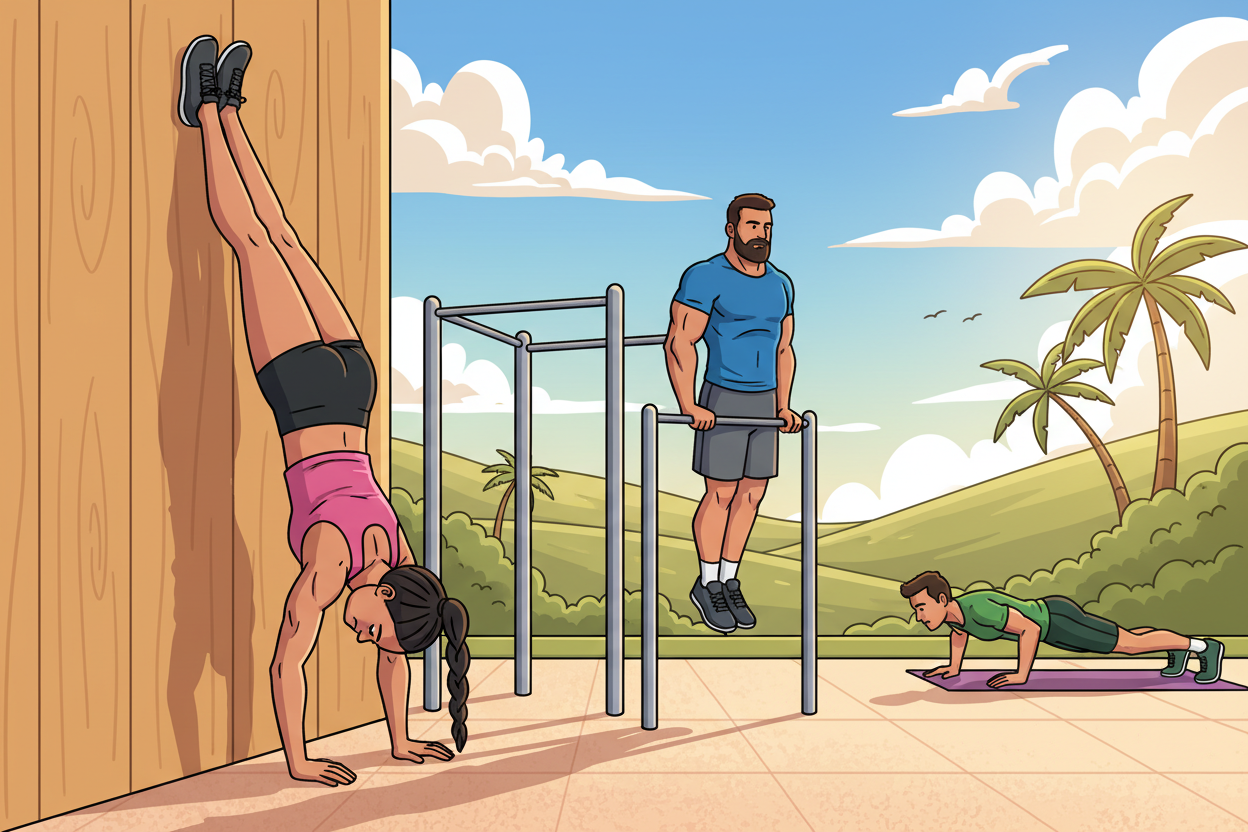
Ever feel like your fitness journey is stuck in a rut, with too many options and not enough real results?
Let me introduce you to calisthenics—a world where your body is the only equipment you need, and progress feels tangible every single session.
With over 40 foundational movements to explore, this discipline unlocks functional strength and a freedom I never found in crowded gyms.
I remember staring at advanced moves, thinking they were impossible. Then I learned to break them into bite-sized pieces my body could actually handle.
Whether you’re taking your first steps or refining your current routine, these exercises can transform not just your physique, but how you move through life.
The beauty of bodyweight training is its simplicity. You grab a bar, find some space, and start building a resilient body that performs as well as it looks.
For anyone just starting out, I’ve got a fantastic resource on calisthenics for absolute beginners to help you lay the perfect foundation.
My goal here is simple: to give you the tools to crush your goals, one safe and effective workout at a time.
Key Takeaways
- Calisthenics provides a vast library of over 40 exercises to build functional strength and training freedom.
- Complex movements can be broken down into manageable steps for steady and safe advancement.
- This discipline is accessible to everyone, from complete beginners to advanced athletes.
- Bodyweight training develops a physique that is as capable as it is aesthetic.
- A proper foundation is crucial for effective and sustainable long-term training.
- Every session brings you closer to mastering your own body and crushing your personal goals.
Set Clear Calisthenics Objectives
The moment I wrote down my first real calisthenics goal, everything clicked into place. I stopped wandering from exercise to exercise. My training had a true north.
Be specific. Do you want a 30-second handstand or your first muscle-up? Defining this target level gives your effort a clear purpose. It turns abstract dreams into a measurable mission.
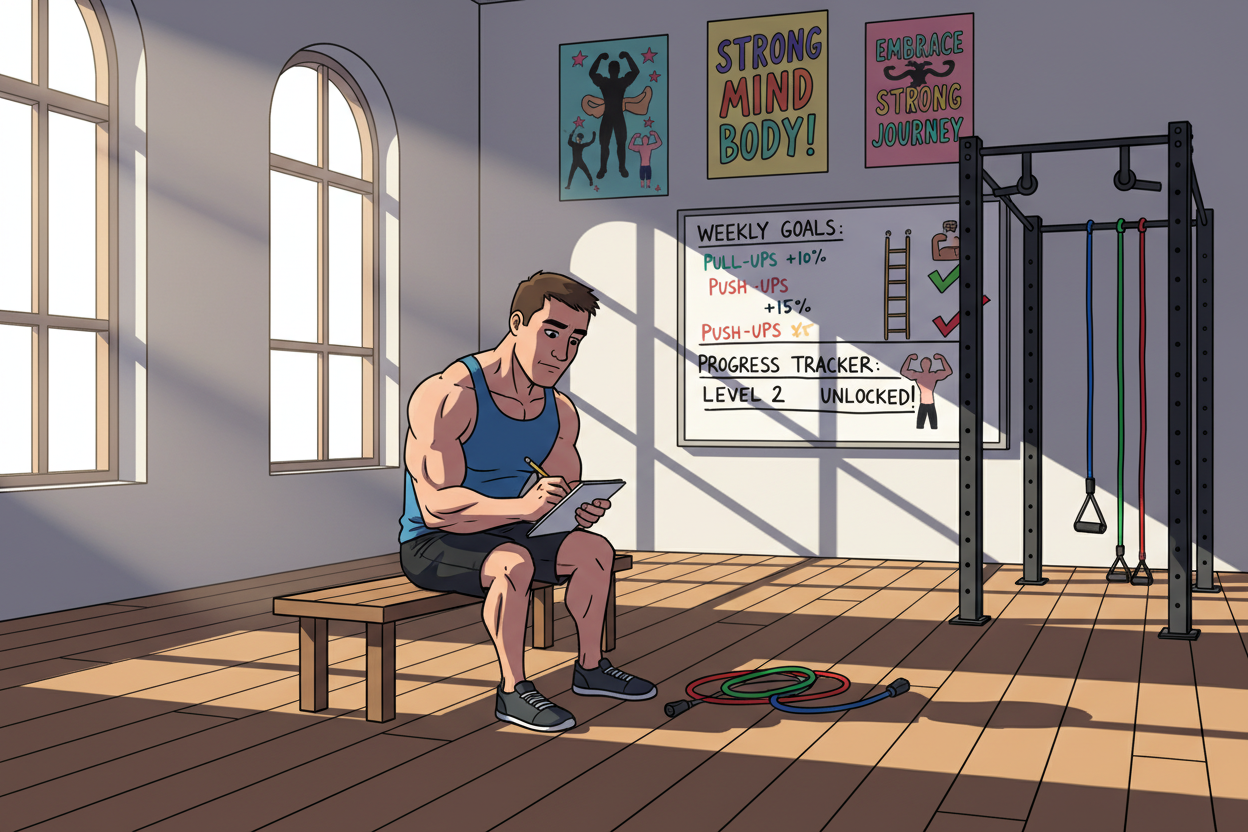
Next, honestly document your starting position. How many push-ups can you do right now? This snapshot is your power. It lets you see every ounce of strength you gain.
I encourage you to grab a notebook. Write your calisthenics goals down. This simple act builds a mental blueprint. It guides every session toward your ultimate success.
Visualizing the outcome fuels your daily work. You’re not just working out. You’re building a new version of yourself, rep by rep. That focus is how champions are made in calisthenics.
Establish a Solid Foundation with Beginner Exercises
I used to think I needed fancy gear to get strong, until I discovered the raw power of basic calisthenics exercises. This approach transformed my entire perspective on fitness.
Zach Watson, a respected PT at the Gymshark Lifting Club, insists beginners must master these fundamentals first. I completely agree—skipping this step is the fastest way to stall your growth.
Building foundational strength here prevents common overuse injuries later. Your body learns proper movement patterns that become automatic.
Aiming for 10 strict pull ups became my personal benchmark. This goal builds the exact strength required for more complex movements.
We can develop incredible upper body power with just a simple pull-up bar. It’s the most versatile piece of equipment for any home workout.
Establishing this base ensures your body is ready for future challenges. You’ll advance safely without skipping vital developmental steps.
Every solid workout begins with this strong foundation. It’s the secret to long-term success in your training journey.
Develop Core Strength with Essential Movements
Forget wobbly handstands and shaky push-ups—mastering your core is the game-changer you’ve been missing. A strong center connects your entire body into one powerful unit.
This isn’t about endless crunches. It’s about smart, foundational movement.
Plank Variations for Stability and Endurance
Planks taught me what real stability feels like. They build the endurance your body needs for every other exercise.
Different variations target unique areas. Mixing them up prevents boredom and builds complete resilience.
| Variation | Primary Focus | Key Benefit |
|---|---|---|
| Standard Plank | Full-body tension, anterior core | Builds foundational endurance for holds |
| Side Plank | Obliques and lateral stability | Prevents rotation during asymmetric moves |
| Reverse Plank | Posterior chain, shoulder stability | Improves posture and back strength |
This stability translates directly to other skills. For handstand hold practice, I place my hands 30cm from the wall. This position builds serious shoulder and core strength safely.
Hollow Hold Techniques to Enhance Control
The hollow hold is a fundamental exercise. It teaches your body to maintain full tension from head to toe.
This control is vital for advanced feats. It also improves your push ups by engaging the chest and core as one system.
During push ups, keep your elbows at a 45-degree angle. This protects your shoulders while maximizing chest engagement. Your hands must stay firmly planted for a solid base.
Master these essentials. You’ll find your body becomes incredibly resilient, ready for any challenge.
Master Calisthenics Techniques with Structured Training
When gyms shut their doors in 2020, a powerful shift happened. People discovered they could build serious strength right at home.
I’ve seen so many turn to calisthenics as their main method. They achieved functional, solid results that stuck.
The secret is structured training. It forces your body to adapt and builds raw power.
We master any complex movement by breaking it into smaller parts. This is the golden rule of a great program.
Consistent effort separates casual practice from elite performance. Tracking your sessions ensures your body is always challenged.
This is the only way to guarantee real results and crush your goals.
| Training Element | Its Role | Practical Application |
|---|---|---|
| Goal Setting | Provides direction and measurable targets | “Achieve 5 strict pull-ups in 4 weeks” |
| Exercise Progression | Systematically increases difficulty | Move from knee push-ups to full push-ups |
| Session Tracking | Ensures consistent overload and motivation | Log reps, sets, and how you felt each workout |
| Recovery Integration | Allows the body to rebuild stronger | Schedule at least one full rest day per week |
Follow this structure. You’ll unlock a new level of ability in your calisthenics journey.
how to progress in calisthenics
Advancing in bodyweight training isn’t about working harder—it’s about working smarter. True growth comes from manipulating your own mass to create fresh challenges.
I often change the angle of a movement to make it tougher. This simple tweak forces your body to adapt and build new strength.
Once you hit a new level, add complexity. Your routine must evolve to avoid stagnation. Every calisthenics movement has a harder version waiting.
Focus on the quality of each exercise. This builds the stability needed for more intense training later.
| Progression Method | How It Works | Best For |
|---|---|---|
| Change the Angle | Elevate feet or hands to increase load on muscles. | Push-ups, rows, and plank holds. |
| Add Complexity | Introduce pauses, tempos, or combine movements. | Building control for skills like muscle-ups. |
| Increase Time Under Tension | Slow down the eccentric (lowering) phase of a rep. | Developing raw strength and muscle endurance. |
| Reduce Leverage | Extend limbs further from your center of gravity. | Making exercises like leg raises significantly harder. |
Use these tools deliberately. Your body will respond with incredible new ability.
Incorporate Dynamic Warm-Up and Mobility Work
I used to rush straight into my workout, until a nagging shoulder tweak taught me the non-negotiable value of a proper warm-up. This step is your training insurance policy.
My routine now always begins with 3 to 5 minutes of light cardio. Jumping jacks or a quick jog raise my heart rate and prep my body for action.
Dynamic mobility comes next. This isn’t about static stretching. It’s about moving your joints through their full range of motion with control.
| Warm-Up Component | Primary Focus | Key Benefit |
|---|---|---|
| Light Cardio | Cardiovascular system, core temperature | Increases blood flow, primes muscles for work |
| Dynamic Stretching | Major muscle groups and joints | Improves flexibility and movement readiness |
| Joint Circles | Wrists, shoulders, ankles | Lubricates joints, prevents acute strain |
Never forget your hands and wrists. They bear your entire body weight in so many exercises. Spend time warming them up thoroughly.
A great warm-up wakes up your nervous system. Your mind and body connect, ready to perform at their best from the first rep.
This investment protects your long-term health. It ensures your body can handle advanced calisthenics for years to come.
Use Effective Training Methods to Boost Progress
The real breakthrough in my calisthenics journey came when I stopped random workouts and started using proven methods.
I hit a wall where just showing up wasn’t enough. My strength gains stalled. That’s when I discovered five powerful training systems.
Super Sets, Drop Sets, Circuit Training, Pyramids, and EMOM each offer a unique stimulus. Your body must adapt, sparking new growth.
Choosing the right method for your goal is key. This table breaks down their core uses.
| Training Method | Primary Focus | Best Application |
|---|---|---|
| Super Sets | Maximizing work density, building lean muscle | Pairing opposing movements like push-ups and rows |
| Drop Sets | Pushing past muscular failure for hypertrophy | Finishing a set of pull-ups to complete fatigue |
| Circuit Training | Improving cardiovascular endurance and stamina | Stringing together 4-6 exercises with minimal rest |
| Pyramids | Building raw strength through incremental loading | Starting light and adding reps/weight each set |
| EMOM (Every Minute on the Minute) | Developing pace, consistency, and work capacity | Performing a set number of reps at the start of each minute |
Programming Your Routine for Consistency
Your plan must be sustainable. I program my workout days in advance. This creates a non-negotiable habit.
Consistency builds lasting strength. Track your sessions. Small, regular efforts compound into massive results.
Balancing Push, Pull, and Leg Work
We must develop all major muscle groups equally. A balanced body is a powerful, injury-resistant one.
Structure your week with dedicated push, pull, and leg sessions. This prevents imbalances and builds functional, harmonious muscle.
Experiment with different training styles. Find the method that makes your calisthenics practice thrive.
Engage in Super Sets and Drop Sets for Enhanced Endurance
My endurance used to hit a wall halfway through my sessions. I discovered the power of pairing exercises back-to-back.
Super Sets combine two different movements for separate muscle groups. This method saves time and builds serious stamina.
When I perform Drop Sets on dips, I push my muscles to their absolute limit. This builds real, functional strength.
These advanced techniques force your body to work harder, even when fatigued. They are fantastic for triggering physical growth.
| Method | How It Works | Best For |
|---|---|---|
| Super Sets | Perform two exercises back-to-back with no rest, targeting opposing muscle groups. | Increasing workout density and building lean muscle efficiently. |
| Drop Sets | After failure, reduce the difficulty (like moving to knee push-ups) and continue the set. | Pushing past plateaus and maximizing muscle fatigue for hypertrophy. |
Alternating between exercises keeps your heart rate elevated. This improves your overall cardiovascular health in every workout.
Add these techniques to your next calisthenics session. They provide the intensity needed for incredible new endurance.
Optimize Your Circuit Training Routine
Circuit training became my secret weapon for squeezing a full-body challenge into my busiest days. I select a variety of calisthenics moves that target every major muscle group.
This approach keeps my entire body engaged from start to finish. The constant rotation prevents boredom and sparks new growth.
When you’re at a beginner level, adjust the intensity. Choose easier variations of each exercise to maintain perfect form. This builds a safe and solid foundation.
We build incredible strength by moving quickly from one station to the next. Keep rest periods very short to maintain a high heart rate.
A well-structured circuit workout is perfect when you’re short on time. You still get a high-quality, intense session that delivers real results.
By constantly changing the movements, your body faces fresh challenges. This is the key to long-term advancement in your calisthenics practice.
Experiment with different exercise combinations in your next workout. You’ll unlock new levels of endurance and strength.
Mix in Pyramids and EMOMs for Varied Challenges
The day I blended pyramid progressions with EMOM drills was the day my calisthenics practice transformed. These two styles offer a fantastic way to break monotony.
Pyramids involve increasing or decreasing repetitions in a specific order. EMOM—Every Minute on the Minute—challenges you to complete work within a set time. Mixing them keeps your training fresh at any fitness level.
Benefits of Pyramid Structures
I enjoy using the pyramid method. It provides a clear structure that helps me track my strength gains as I move through each exercise.
You can safely push your body to perform more volume. This is a proven way to build endurance and serious mental toughness.
Tips for Successful EMOM Sessions
EMOM sessions are a fantastic way to challenge your body. You must complete your reps before the next minute starts.
This approach forces you to manage your time and energy with extreme precision. It’s a powerful tool for improving your overall work capacity.
We can mix these two styles to ensure we never get bored. Your calisthenics journey stays exciting and effective.
Utilize Assisted Variations for Progressive Overload
My biggest leaps in calisthenics didn’t come from grinding harder, but from using tools like resistance bands to build a bridge to the next level.
These assisted variations are a strategic tool for progressive overload. They let you practice the full movement pattern while your strength catches up.
I often use a band to make an exercise more accessible. This builds the necessary muscle memory on the bar or floor.
Your body learns the motion safely. You can complete more high-quality reps, even when tired.
Choosing assistance isn’t failing. It’s a smart way to train.
| Method | How It Works | Best For |
|---|---|---|
| Resistance Band Assist | Loops provide upward force to reduce the load you must lift. | Pull-ups, dips, and muscle-up transitions. |
| Elevated Surface Assist | Placing hands or feet on a raised platform to make exercise easier. | Push-ups, rows, and inverted holds. |
We should view these tools as part of a long-term plan. Eventually, you won’t need the help.
That moment is a clear sign your strength has reached a new level. Your body is ready for the full challenge.
Listen to Your Body and Prioritize Recovery
Your body speaks in whispers of soreness and fatigue; learning to listen is the ultimate training skill.
I learned this the hard way. Pushing for new strength without heeding those signals led to burnout. Now, I treat recovery with the same respect as my calisthenics sessions.
We must prioritize rest. Intense training creates tiny tears in muscle fibers. Giving your body 24 to 72 hours between sessions is non-negotiable. This time allows for repair and growth.
Ignoring fatigue is a direct path to a plateau. That’s why I schedule rest days into my weekly plan. They are not lost days—they are investment days.
Recovery is when your body actually builds the strength you worked for. Never feel guilty about a day off. Relaxation is part of the process.
By respecting this need, you ensure a return at a higher level. You’ll come back to your calisthenics practice with more energy and power. Your progress depends on this balance.
Integrate Flexibility and Mobility into Daily Training
My training hit a new stride when I stopped treating mobility as an afterthought and made it a daily ritual. A full range of motion is non-negotiable for advanced calisthenics moves. It allows your body to achieve perfect form safely.
Tight muscles directly limit your strength. They place unnecessary stress on joints like your hands, wrists, and feet. This is especially true during intense bodyweight sessions.
We should focus on improving our range of motion every single day. This simple habit makes your entire body feel fluid and capable. Movement becomes effortless and powerful.
Consistent stretching lets you recover faster from tough workouts. You’ll return to strength training with much less soreness. Your performance improves because your muscles are supple and ready.
I find ten minutes of dedicated mobility work changes everything. Each calisthenics exercise feels more natural and less forced. Your practice transforms when you move with freedom.
| Exercise | Target Area | Key Benefit |
|---|---|---|
| Wrist Circles | Hands/Wrists | Improves joint lubrication for weight-bearing moves |
| Cat-Cow | Spine | Enhances spinal range of motion for fluid movement |
| Leg Swings | Hips/Feet | Increases dynamic flexibility for kicks and holds |
| Shoulder Dislocates | Shoulders | Expands range for overhead calisthenics movements |
Practical Tips from Expert Calisthenics Coaches
There’s a common thread in the wisdom shared by top calisthenics coaches: mastery always comes before intensity. I learned this directly from Zach Watson. He insists you must focus on perfect technique and full range of motion before adding load.
This builds the unshakable foundation needed for complex movements. It’s the smartest path to real, lasting strength.
Focus on Technique and Range of Motion
Zach Watson, a coach I admire, always emphasizes this. Master your form and your range of motion before you try to add more weight or speed.
I remember struggling with pistol squats for months. By focusing on my balance and sinking deeper with my feet, I finally conquered the movement. Your body learns the correct pattern this way.
When you’re on the bar, keep your hands tight and your core engaged. This is the only way to perform with total control. Every exercise benefits from this mindful approach.
Embrace Patience and Consistent Recovery
We must embrace patience when learning new bodyweight exercises. Building true strength takes time and a consistent approach to every session.
Expert coaches agree on another critical point. You must prioritize your recovery just as much as your workout time. Your body rebuilds and gets stronger during rest.
This balance is non-negotiable for success in calisthenics. Listen to your body, respect the process, and your range of motion and power will soar.
Conclusion
Looking back at my own path, the most powerful lesson calisthenics taught me wasn’t about strength—it was about trust.
This guide aimed to show you that mastering calisthenics is a transformative journey. You build real strength, patience, and a deep connection with your own body. We’ve covered everything from basic training methods to advanced techniques.
You now have a complete roadmap to reach your next level. Remember, every workout you complete is a step forward. Stay consistent and keep pushing yourself.
You hold the knowledge to design a routine that works for your body. Grab your gear and start your journey toward elite strength today. I’m excited to see how far your calisthenics practice can take you!