


Ever stare at the scale after weeks of hard training, feeling that familiar sting when the number barely budges? I’ve been there—pouring effort into the gym but struggling to see the muscle mass I was working for. This article is about cutting through that noise.
Building a powerful physique isn’t just about lifting. You need fuel. Research, like the study by Lambert and colleagues, suggests a 15 percent increase in your daily calories can be the key to effective muscle building. For some athletes, like the bodybuilders in Iraki’s 2019 research, that can mean nearly 3,800 calories a day!
My mission is simple: to help you crush your goals without crushing your wallet. We’ll dive into the best sources of protein and smart ways to hit your calorie targets. It’s not about eating everything in sight—it’s about strategic, sustainable choices that support real progress.
Remember, every body is different. Your perfect plan considers your activity level and personal targets. Let’s build a foundation for your muscle growth journey that actually works.
Key Takeaways
- Effective muscle building requires a consistent caloric surplus, often around 15% more than your maintenance needs.
- High protein intake is non-negotiable for repairing and building new muscle tissue.
- Strategic grocery shopping is essential for gaining muscle on a tight budget.
- Your individual activity level and metabolism dictate your precise calorie and nutrient needs.
- Sustainable muscle mass gains come from consistent nutrition that supports your training.
- Focus on whole, nutrient-dense foods to fuel your body efficiently for muscle growth.
Maximizing Savings for Your Bulking Journey
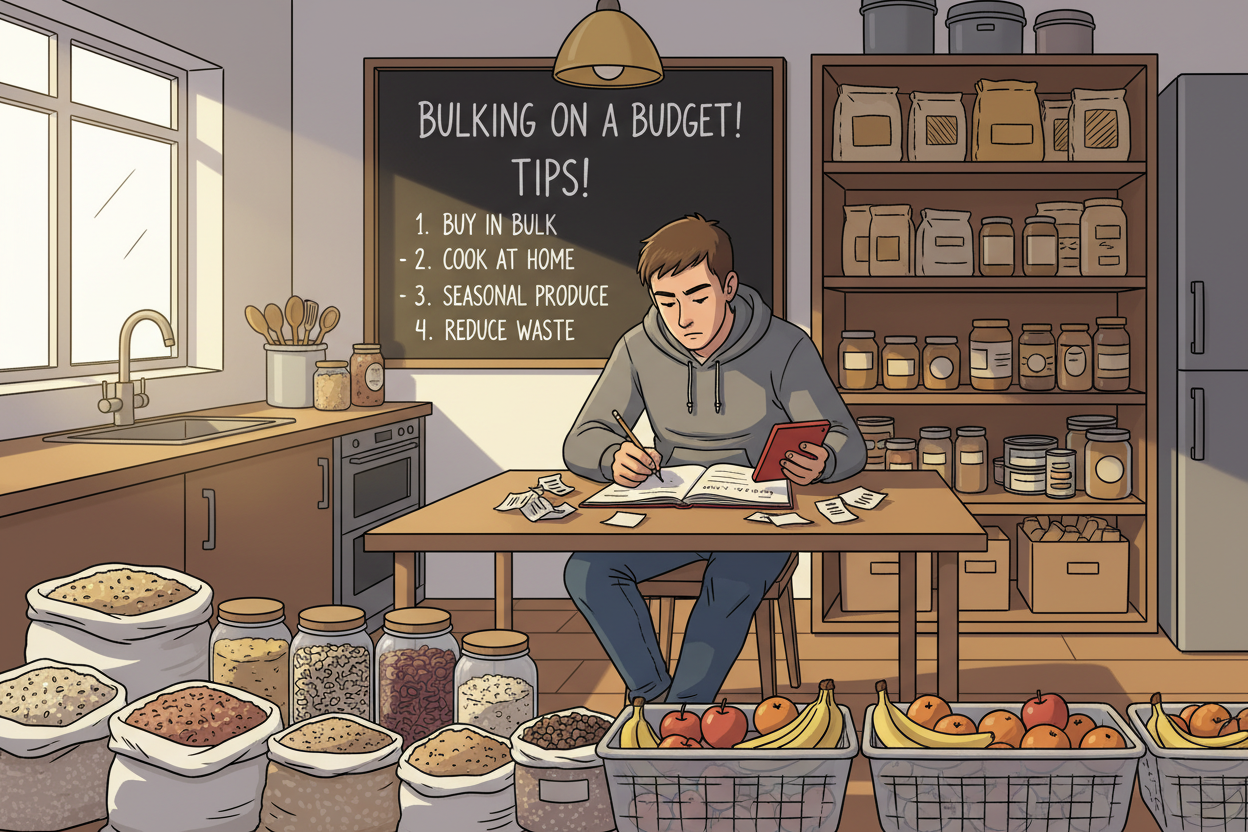
I used to think building muscle meant spending a fortune on fancy foods and supplements. Ben Brewster got it right—you can bulk on a budget by focusing on your macros, not just eating more meals. It’s about being smart with every dollar.
Understanding Caloric Surplus Without Overspending
Staying in a caloric surplus doesn’t require expensive steaks. I’ve found that nutrient-dense foods pack in the protein and healthy fat you need. This keeps your daily intake high without extra cost.
Your diet should fuel growth efficiently. Think about the calorie value of each item. A strategic approach beats just buying more food.
Buying in Bulk and Smart Substitutions
Wholesale stores like Costco are game-changers. You can stock up on essentials for your bulk. This is a proven way to keep costs low.
Smart swaps make a huge difference. Switching to whole milk or higher-fat ground beef boosts your calories instantly. You get more from the same shopping trip.
| Regular Item | Budget Upgrade | Key Benefit |
|---|---|---|
| Skinny Milk | Whole Milk | Adds healthy fat & calories |
| Lean Ground Beef | 80/20 Ground Beef | More calories, same protein |
| White Rice | Brown Rice | Adds fiber & nutrients |
| Protein Shakes | Greek Yogurt & Oats | Whole food protein & carbs |
Forget expensive supplements. Whole foods provide the necessary protein and fat. A successful plan is about strategy, ensuring you hit your targets every day.
grocery list for bulking That Fuels Your Muscle Growth
Let’s talk about the actual fuel—the core foods that turn effort in the gym into visible muscle. We need reliable sources that deliver quality nutrients consistently.
This isn’t about complexity. It’s about choosing foundational items that support your goals every single day.
Key Proteins and Dairy Essentials
I always keep chicken breast and ground beef on hand. They’re my most reliable protein sources for consistent muscle growth.
Adding cottage cheese and whole milk to your daily meal plan is an easy win. They boost your protein and healthy fat intake for building muscle mass.
Eggs are a versatile powerhouse. I use them in almost every meal for high-quality protein and fat. I also recommend fatty fish like salmon weekly for a healthy protein fat source.
| Food Item | Primary Role | Budget Benefit |
|---|---|---|
| Chicken Breast | High-Protein Muscle Builder | Extremely cost-effective per gram of protein |
| Whole Eggs | Protein & Fat Combo | Provides 75-90 calories and nutrients each |
| Whole Milk | Liquid Calories & Protein | Cheaper than most protein shakes |
| 80/20 Ground Beef | Protein with Healthy Fats | More calories and flavor than lean versions |
Complex Carbohydrates and Energy Boosters
Your body needs fuel for intense training. That’s where smart carbohydrates come in.
You should include black beans and rice as primary carbohydrates. They’re affordable foods that provide lasting energy.
These complex carbs are the steady burners. They keep you powered through your toughest workouts without costing a fortune.
Balancing Proteins, Carbs, and Fats on a Budget
You don’t need expensive foods to hit your protein, carb, and fat goals. I’ve found budget-friendly staples that work.
It’s all about picking the right items from each group. This keeps your diet effective and your wallet happy.
Affordable Protein Sources: Chicken, Eggs, and Beans
I stick to a simple rule for protein. Follow Ben Brewster’s tip: aim under $4 per pound for meat and under $2.50 for chicken breast.
Eggs and canned beans are my other go-tos. They deliver quality protein without the high cost. This approach supports steady muscle growth.
Cost-Effective Carbs: Rice, Pasta, and Potatoes
Your body needs energy. That’s where smart carbohydrates come in.
I rely on rice, pasta, and potatoes. Sweet and white potatoes are fantastic. They fuel tough training sessions for pennies.
Healthy Fats Without the High Price Tag
Don’t overlook fat. It’s crucial for health and extra calories.
I add a spoon of peanut butter to my meal. A drizzle of olive oil works too. These are much cheaper than fancy supplements.
| Food Item | Primary Macro | Budget Benefit |
|---|---|---|
| Chicken Breast | Protein | High protein per dollar when bought on sale |
| Brown Rice | Carbohydrates | Extremely cheap in bulk, provides lasting energy |
| Whole Eggs | Protein & Fat | Nutrient-dense and very affordable per serving |
| Potatoes | Carbohydrates | Among the cheapest energy sources available |
| Peanut Butter | Healthy Fats | Inexpensive source of dense calories and fats |
Mixing these foods creates a balanced plate. It makes your bulking journey sustainable and smart.
Meal Prep and Smart Shopping Tactics
Ben Brewster was right—preparing your meals in advance saves a shocking amount of cash and mental energy every month. This simple shift turns chaotic eating into a powerful system for growth.
Your consistency in the kitchen directly fuels your progress. A solid plan removes daily guesswork and keeps you on track.
Planning Weekly Menus for Consistent Bulk Gains
I build my weekly meal plan around hitting targets. A great sample meal is a bowl of cottage cheese with hard-boiled eggs and a spoon of peanut butter.
This combo delivers a perfect balance of protein and healthy fat. It makes hitting your calories and protein per day effortless.
I map out staples like chicken breast and black beans for the whole week. Knowing what’s next eliminates stress and supports your diet.
Preparing Meals in Advance to Save Time and Money
My Sunday cooking session is non-negotiable. I cook grains, roast proteins, and chop veggies for the coming days.
This investment saves hours of time during busy weekdays. It also protects your health and exercise routine by preventing costly takeout.
I buy foundational foods like whole milk and butter in large quantities. Buying in bulk is the ultimate budget hack for your bulking journey.
A little upfront work ensures every meal supports your goals. This strategy makes building muscle sustainable per week.
Using Macro Strategies to Optimize Muscle Gains
I learned the hard way that mindlessly eating more doesn’t build the physique you want. The real game-changer is a strategic approach to your macros.
Calculating Calorie Needs and Adjusting Intake
Research by Spendlove et al. gives us a solid target. They suggest aiming for about 45 calories per kilogram of body weight to gain 0.25 to 0.5 percent of your weight per week.
I track my macros closely to ensure I’m hitting my protein and fat goals. This precision is essential for effective muscle building.
You can easily sneak in extra calories. Adding a spoon of peanut butter or a pat of butter to a shake is a simple trick. It saves time and supports your diet.
Avoiding Overconsumption and the Dirty Bulk Pitfall
Ben Brewster warns against “dirty bulking” for good reason. It leads to excessive fat gain, not the lean muscle mass you’re after.
Your meal plans should focus on quality. I build mine around chicken breast, black beans, and cottage cheese. These foods fuel muscle growth without the junk.
I also include eggs and fish regularly. They help me hit my protein targets for the day while supporting overall health and exercise performance.
This strategic focus helps you gain muscle efficiently, without the messy bulk.
Conclusion
Transforming your physique on a budget is entirely possible—I’ve lived it, and now you have the blueprint. This article aimed to prove that your muscle growth goals don’t require a fortune.
Focus on staples like whole milk and peanut butter. Adding a pat of butter to a meal can boost your calories effortlessly. These simple tweaks help you hit your targets every single day.
Consistency is your secret weapon. Stick to your meal plan and give your body the protein and healthy fat it craves. Don’t shy away from dietary fat—it’s essential fuel.
I encourage you to try the sample meal ideas shared. They’re designed to save you time and money per week. You’ve got all the tools—now go crush your journey!