Benefits of Pilates for Strength Training: Top Advantages
Published
Think Pilates is just stretching? Think again. Developed by Joseph Pilates nearly a century ago, this holistic exercise system builds muscle control like a sculptor shapes clay. It’s not about brute force, it’s about precision, balance, and building real control of your body.
Let’s clear the mat: Pilates isn’t just for dancers or post-rehab routines. Modern athletes from NFL players to MMA fighters use the Pilates method to boost explosive power while protecting joints. Joseph originally called it “Contrology”, a practical blend of mental focus and physical control that turns everyday movements into strength-building opportunities.
Here’s why it works. Traditional weightlifting often creates muscle imbalances. Pilates targets your entire kinetic chain, from deep core muscles to stabilizers you didn’t know existed. The result? Better posture during deadlifts, tighter form during squats, and that rock-solid feeling when you tackle new PRs.
We’ll show you how Joseph’s wartime rehabilitation techniques evolved into today’s strength workouts. You’ll discover why improved balance means heavier lifts, and how breathing patterns can literally change your muscle engagement. Spoiler: Adding this work helps your gym progress.
Introduction to Pilates and Strength Training
Your great-grandma’s floor exercises just leveled up. In the 1920s, Joseph Pilates developed his exercise program, “Contrology”, a blend of yoga, boxing, and gymnastics. Originally used to rehabilitate bedridden soldiers during WWI, these methods now fuel Olympians and weekend warriors alike.
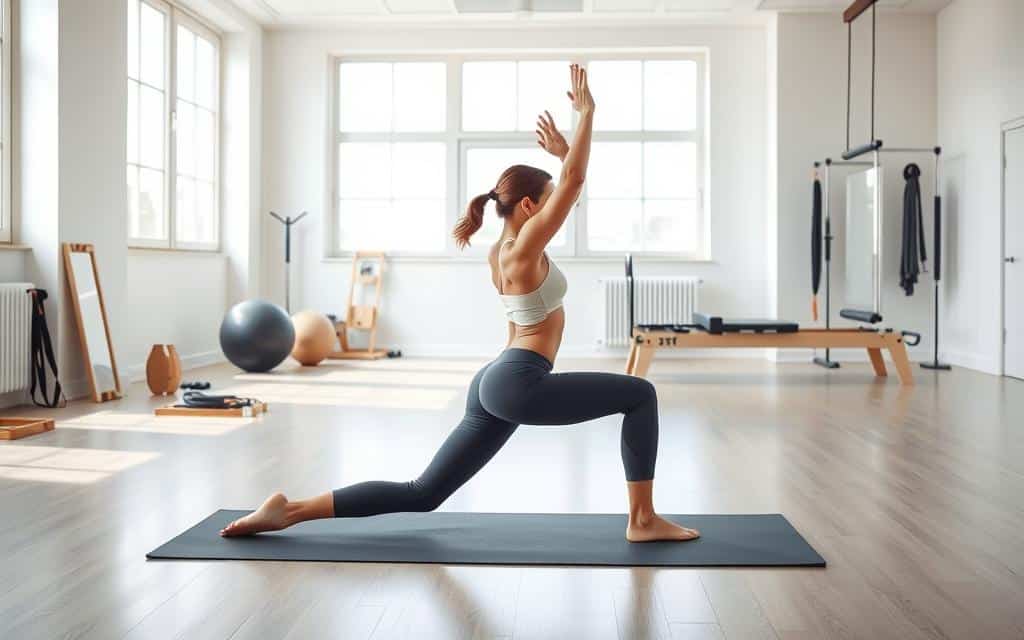
More Than Just Floor Work
Modern Pilates offers two paths to power:
- Mat key: Uses body weight for resistance (think planks with a twist)
- Equipment evolution: Reformers and Cadillacs add spring-loaded challenges
Pilates teaches your body to work as one unit – no muscle left behind.
The Strength Connection
Traditional weight training builds bulk. Smart exercise builds resilience. Here’s the deal:
- Muscles learn to fire in perfect sequence
- Joints gain stability through full-range motions
- Your nervous system becomes a precision conductor
Next time you struggle with push-ups, remember: Joseph’s original students could hold plank positions for minutes while reciting poetry. Now that’s multitasking.
What is Pilates? A Brief History and Overview
Joseph Pilates didn’t invent fitness – he redefined what bodies could achieve. Born in 1883 in Germany, this physical trainer combined Eastern mindfulness with Western exercise science decades before cross-training became trendy. His signature method emerged from a desperate need: rehabilitating injured soldiers during WWI using bed springs as resistance tools.
The Legacy of Joseph Pilates
Concentration, control, and breath turned exercises into meditation.
The Evolution from Mat to Equipment
Original mat work focused on bodyweight mastery. But Joseph’s inventive spirit birthed the reformer – a sliding carriage with adjustable springs. Modern studios now feature:
- Cadillac tables for spinal decompression
- Wunda chairs testing single-leg stability
- Barrel units enhancing back flexibility
These tools challenge muscles through resistance you can’t replicate on the floor.
Understanding the Benefits of Pilates for Strength Training
Ever tried lifting weights while balancing on one leg? That’s Pilates in action. Regular Pilates builds muscle endurance. The key? Every exercise demands precision – like threading a needle with your entire body.
Unlike isolated lifts, Pilates chains movements together. Imagine doing a side plank while reaching overhead – your obliques, shoulders, and hip stabilizers fire simultaneously. Combined with traditional training, it builds functional stability.
| Traditional Training | Pilates Approach | Combined Result |
|---|---|---|
| Focuses on single muscle groups | Engages kinetic chains | Enhanced movement efficiency |
| Linear repetitions | 3D motion patterns | Better joint protection |
| Static posture | Dynamic balance challenges | Improved reaction time |
Here’s your game plan: blend Pilates into existing workouts. Start with 10-minute post-lift sessions using these moves:
- Roll-Up: Builds spinal strength for safer deadlifts
- Swan Dive: Activates back muscles missed during rows
- Side Kick Series: Boosts hip stability for squats
Your muscles learn to communicate – not just contract. That’s how barre instructors out-lift powerlifters pound-for-pound. The strength you gain here translates to real-world power: picking up kids, moving furniture, or nailing that weekend 5K.
Pilates and Core Strength Development
What if your abs could work smarter, not harder? Your core isn’t just six-pack muscles – it’s your body’s natural weight belt. From stabilizing your spine during deadlifts to preventing slips on icy sidewalks, these deep muscles keep you upright and injury-free. Let’s break down how Pilates wakes up this hidden power grid.
Core Activation: The Mind-Muscle Link
Forget crunches. Pilates teaches three keys to core engagement:
- Breath as fuel: Inhale to prepare, exhale to tighten like zipping a tight jacket
- Laser focus: Visualize muscles working during each movement
- Slow burns: 5-second holds trump rapid reps
The pelvic curl teaches you to feel your transverse abdominis, the deep muscle that wraps your waist like a corset.
Mat vs. Equipment: Choose Your Challenge
Both methods build stability, but in different ways:
| Mat Work | Equipment Work |
|---|---|
| Uses gravity for resistance | Springs add adjustable tension |
| Ideal for home practice | Offers guided progression |
| Great for joint health | Targets muscle imbalances |
New moms often prefer mat exercises for gentle reactivation. CrossFit athletes? They thrive on reformer challenges that mimic heavy lifts. My rule: Start simple. Nail the basic roll-up on the floor before tackling the Cadillac.
Real-world payoffs sneak up on you. You may notice easier grocery carrying and steadier stairs.
Enhancing Overall Body Strength and Mobility
Your body’s a symphony – Pilates conducts every section. Unlike isolated workouts, this method turns scattered motions into coordinated power. Consistent practice improves range of motion. Why? Every exercise acts like oil for rusty joints while building lean muscle.
Whole Body Conditioning Through Pilates
Here’s the key: movements demand cooperation between core stabilizers and peripheral muscles. Try the side-lying leg lift – your glutes fire while shoulders anchor you.
Three useful effects:
- Mobility: Fluid transitions between poses lubricate stiff hips
- Posture: Spinal alignment becomes second nature during daily tasks
- Muscle teamwork: Shoulders learn to support legs during kicks
Physical therapists love this approach. Your body learns to move as one unit – no weak links allowed.
Best part? Injury rates plummet. When muscles share the load properly, no single area gets overworked. That’s why marathoners use Pilates to survive training seasons. Your turn: pair it with existing workouts for bulletproof joints and effortless motion.
Pilates for Improved Posture and Spine Health
Ever catch yourself slouching at your desk? Your spine craves movement – not just sitting pretty. Pilates acts like a chiropractor and personal trainer combined, using targeted exercises to decompress vertebrae and improve alignment.
Spine Alignment and Flexibility
Traditional posture fixes focus on sitting straight. The Pilates method teaches your body to move correctly. Try these spine-loving drills:
- Spine Twist: Rotates thoracic vertebrae to combat “text neck”
- Swan Dive: Strengthens back extensors while opening chest muscles
- Chest Lift: Trains deep neck flexors to prevent forward head posture
Breathing becomes your alignment tool here. Inhale to prepare, exhale while curling up – this rhythm engages core muscles that support your spine.
| Traditional Fix | Pilates Approach | Result |
|---|---|---|
| Posture braces | Muscle memory training | Natural alignment |
| Static stretching | Dynamic mobility drills | Improved flexibility |
| Pain medication | Targeted muscle activation | Reduced discomfort |
Your spine wasn’t built for modern life’s demands, but with smart fitness strategies, it can thrive.
Injury Prevention and Rehabilitation Through Pilates
What if your workout could heal as it strengthens? Physical therapists often use this method in post-surgery recovery. The key lies in controlled movements that rebuild tissue without strain.
Tailored Movement Strategies
The key? Precision over intensity. Here’s how it works:
- Gradual progression: Start with supine pelvic tilts before advancing to standing work
- Form-first philosophy: Mirror feedback ensures perfect spinal alignment
- Adaptive equipment: Foam rollers for gentle mobilization, resistance bands for safe loading
Take lower back rehabilitation. A typical treatment plan might combine:
| Phase | Exercise | Focus |
|---|---|---|
| 1-2 weeks | Dead Bug variations | Core activation |
| 3-4 weeks | Supported Bridge | Hip alignment |
| 5+ weeks | Modified Swan | Spinal extension |
The key is maintaining natural movement patterns while rebuilding strength.
Boosting Energy, Mood, and the Mind-Body Connection
Ever feel like your brain needs a workout as much as your body? The program Joseph Pilates designed isn’t just about physical gains, it rewires how you think and move. Many regular practitioners say it clears their head as well. Let’s explore why controlled motion becomes moving meditation.
Breath as Your Power Source
Pilates breathing isn’t filler, it’s rocket fuel. Unlike shallow chest breaths, diaphragmatic inhales flood cells with oxygen. Try this during the Hundred exercise: five short exhales per arm pump. Your heart rate steadies while energy surges.
| Traditional Exercise | Pilates Practice | Mental Payoff |
|---|---|---|
| Autopilot reps | Conscious movement patterns | Sharper focus |
| Ignored posture | Real-time alignment checks | Reduced anxiety |
| End-goal focus | Process-oriented flow | Lasting calm |
Equipment like the reformer takes this further. Adjustable springs create resistance that demands awareness, you can’t zone out when the carriage challenges your balance.
Stress dissolves when movement becomes mindful. Chair-based spine twists can ease desk tension. The key? Pilates teaches your nervous system to reset through structured motion. Your mood lifts as muscles and mind sync, proof that fitness isn’t just physical.
Pilates as a Complementary Training for Athletes
Elite athletes know: marginal gains create champions. Top performers from NBA stars to Olympic swimmers now pair their gym sessions with Pilates protocols. Why? Because precision movement patterns sharpen reaction times and get hidden power reserves.
Enhancing Sports Performance
LeBron James credits Pilates for his explosive court transitions. Lindsey Vonn used it to recover from career-threatening knee injuries. The key lies in three main factors:
- Enhanced circulation: Dynamic sequences boost oxygen delivery to muscles during high-intensity plays
- Laser-like attention: Exercises demand mental focus as much as physical effort
- Micro-muscle control: Stabilizers fire faster during sudden directional changes
Try the Single-Leg Stretch before practice. Lying on your back, alternate pulling knees toward chest while maintaining pelvic stability. NFL receivers use this drill to improve cutting agility – your turn to steal their edge.
| Traditional Drills | Pilates Boost | Performance Impact |
|---|---|---|
| Plyometric jumps | Controlled landings | Reduced ACL injuries |
| Weight room squats | Rotational resistance | Stronger rotational power |
| Speed ladder work | Foot articulation drills | Quicker ground contact |
MMA fighters particularly benefit from the Hundred exercise. Rapid arm pumps with sustained core engagement mimic fight-round demands.
The low-impact nature makes it perfect for active recovery days. Instead of complete rest, athletes maintain circulation and joint mobility without overtaxing their systems. Your body gets stronger while you’re literally lying down – now that’s smart training.
Benefits of Pilates for Special Populations
Special populations thrive with movement that respects their bodies’ changing needs. From expecting mothers to active seniors, customized programs deliver results without strain. The key? Adaptability. Exercises can be modified for pregnancy, limited mobility and recovery from surgery.
Movement That Grows With You
Pregnancy changes workout routines. We ditch supine positions after 16 weeks, using side-lying reformer exercises to maintain core engagement safely. Postnatal care focuses on gradual reactivation. Think pelvic floor pulses over planks.
For older adults, balance becomes life-changing. Better balance can lower the risk of falls. The reformer shines here – spring resistance builds leg power without joint pounding.
Three keys make it work:
- Stress reduction: Slow, controlled motions lower cortisol levels
- Muscle control: Focused movements prevent overexertion
- Equipment versatility: Adjustable springs accommodate mobility limits
The reformer works well for diastasis rehab. The carriage’s glide allows gentle core work that beds can’t replicate. Rope-pulling drills improve coordination at any age, proof that smart movement needs no expiration date.
The Role of the Pilates Reformer in Strength Training
Stuck in a fitness plateau? The sliding carriage of a Pilates reformer might be your breakthrough. Joseph’s bed-spring invention now challenges modern athletes and newcomers alike through customizable resistance. Unlike static mat work, this spring-loaded apparatus turns every push and pull into a full-body puzzle.
Advantages of Equipment-Based Exercises
The reformer’s key lies in its adaptability. Springs provide progressive resistance – light enough for rehabilitation yet tough enough for advanced drills. Here’s how it outperforms mat routines:
| Mat Limitations | Reformer Solutions |
|---|---|
| Fixed gravity resistance | Adjustable spring tension |
| Limited support options | Guided carriage movement |
| Static positions | Fluid strength challenges |
Maintaining concentration becomes non-negotiable. The moving carriage demands constant coordination between limbs and core – miss a beat, and you’ll hear the springs protest. Keeping the platform steady during footwork sequences trains your focus.
Adapting to Different Fitness Levels
New moms often start with light springs for pelvic floor reactivation. Women seeking low-impact toning use the carriage’s glide to protect joints while building lean muscle. Beginners appreciate the reformer’s feedback – shaky movements reveal imbalances instantly.
Advanced users? Crank up the springs. Football players mimic tackle impacts by explosively pushing the carriage. Dancers enhance coordination through single-leg exercises that would topple them on the floor. The key ingredient: equipment that grows with your abilities while keeping concentration front and center.
Integrating Pilates into Your Overall Fitness Routine
Your weekly fitness routine just found its missing piece. Blending Pilates with existing workouts creates balance, like adding salt to chocolate, unexpected but effective. Start small: 15-minute mat sessions post-run or pre-lift prime your body for better performance.
Building Foundations, Not Flash
Newcomers often rush into advanced moves. Big mistake. Master these first:
- Breath control: Sync inhalations with preparation, exhales with effort
- Neutral spine: Maintain natural curves during basic exercises
- Micro-movements: Perfect small ranges before expanding
Seasoned athletes benefit differently. Use reformer footwork to improve squat depth. Over years, small adjustments add up.
| Weekly Plan | Beginner | Advanced |
|---|---|---|
| Frequency | 2 sessions | 4 sessions |
| Focus | Form mastery | Power transitions |
| Equipment | Mat + bands | Reformer + tower |
Injury prevention starts with listening. If an exercise feels jarring, modify it. Rotator cuff issues? Swap overhead reaches for elbow-supported moves. The difference between strain and growth lies in smart progression.
Whether you’re rehabbing injuries or training for triathlons, Pilates scales. The same principles work for beginners and athletes. Your turn: start where you are, use what works, and watch your capabilities expand – one controlled breath at a time.
Conclusion
Your strength training deserves more than heavy weights. Through precise movement patterns and adaptable equipment, this century-old practice reshapes how bodies build power. From mat work to spring-loaded reformers, the method meets you at your current level while pushing toward new capabilities.
Regular practice reduces injury risk by teaching muscles to collaborate. Improved balance directly supports heavier lifts. Better spinal alignment turns daily tasks into opportunities for growth. Whether rehabbing injuries or chasing athletic goals, the system scales to your needs.
Joseph’s original vision now fuels modern athletes and grandparents alike. Spring resistance challenges NFL players while supporting postpartum recovery. Chair modifications help seniors maintain independence. The key lies in progression – start with breath control, advance to complex equipment flows.
Consistency matters more than intensity. Three weekly sessions sharpen movement efficiency and improve stability. Over time, you’ll notice easier grocery carries, confident stair climbs, and that satisfying click when joints move smoothly.
Ready to upgrade your routine? Roll out a mat or book a reformer session. Your future self will thank you for embracing smarter prevention strategies and lasting vitality. Strength isn’t just what you lift – it’s how you move through life.
FAQ
How does Pilates build strength differently than weightlifting?
Pilates emphasizes controlled, low-impact movements that target stabilizing muscles and improve joint mobility. Unlike traditional weightlifting, it focuses on functional strength through full-body engagement, think precision over brute force. The Reformer, for example, uses spring resistance to challenge your muscles without heavy loads.
Can Pilates replace traditional strength training for athletes?
While it’s not a direct substitute, Pilates complements athletic training by enhancing flexibility, balance, and core stability. Many pro athletes, like LeBron James, use it to refine movement patterns and reduce injury risks. It’s the key ingredient for peak performance, not the main course.
Is the Pilates Reformer necessary for building muscle?
Not at all! Mat work with bodyweight resistance can still fire up your core and improve lean muscle tone. However, equipment like the Reformer or Cadillac adds adjustable resistance, which ramps up intensity. Think of it as leveling up your workout game when you’re ready.
How does Pilates prevent injuries during other workouts?
By teaching proper alignment and activating underused muscles, Pilates creates a stronger “support system” for your body. Imagine your core as a built-in weight belt, when it’s engaged, you’re less likely to strain your back during deadlifts or twist awkwardly during tennis swings.
Can older adults safely use Pilates for strength gains?
Absolutely. Exercises are easily modified, using a chair for balance or lighter springs on the Reformer, to suit mobility levels. Just avoid advanced moves like the Teaser if you’re new; stick to basics like Pelvic Curls first.
Why do physical therapists recommend Pilates for back pain?
Weak core muscles often contribute to spinal issues. Pilates strengthens the deep abdominals and teaches mindful movement patterns, taking pressure off your discs. Bending and twisting should feel smooth, not crunchy.
How quickly can Pilates improve posture?
Most people notice changes in 4-6 weeks with consistent practice. Exercises like Chest Lift and Swan Dive counteract slouching by strengthening your upper back and stretching tight chest muscles. Pro tip: Pair it with ergonomic desk adjustments for faster results.
Does Pilates really boost energy levels?
Yes! The focus on diaphragmatic breathing increases oxygen flow, while rhythmic movements stimulate circulation. It’s like a double espresso without the jitters. You may feel more alert after a session, especially with dynamic flows like the Hundred.